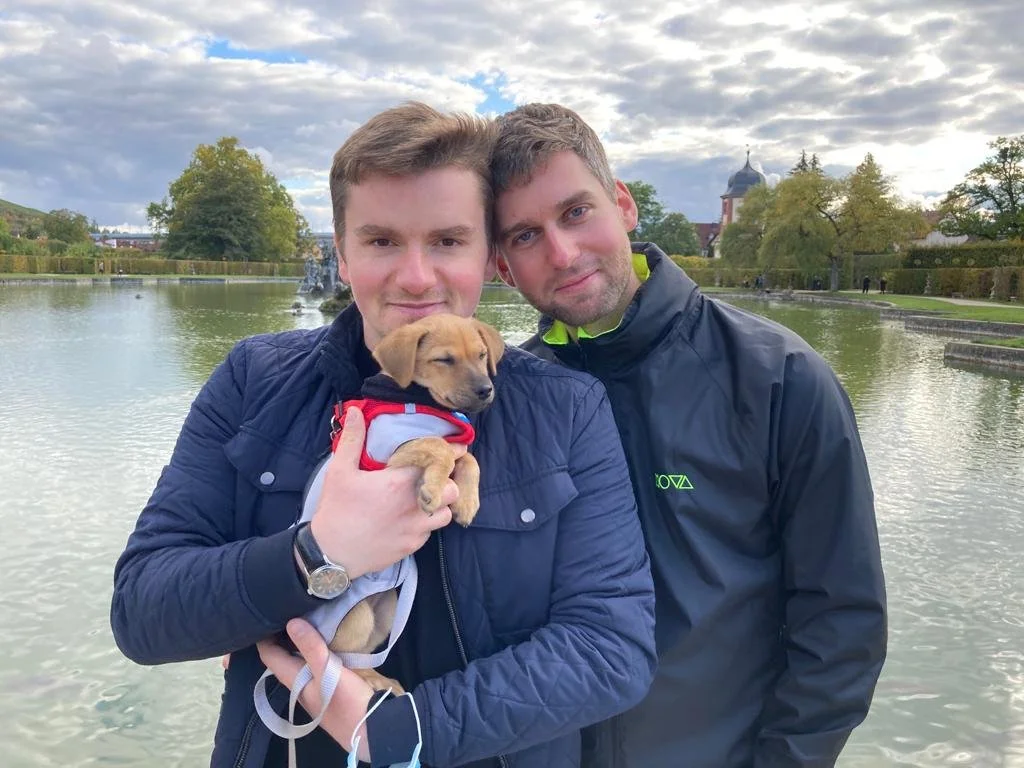
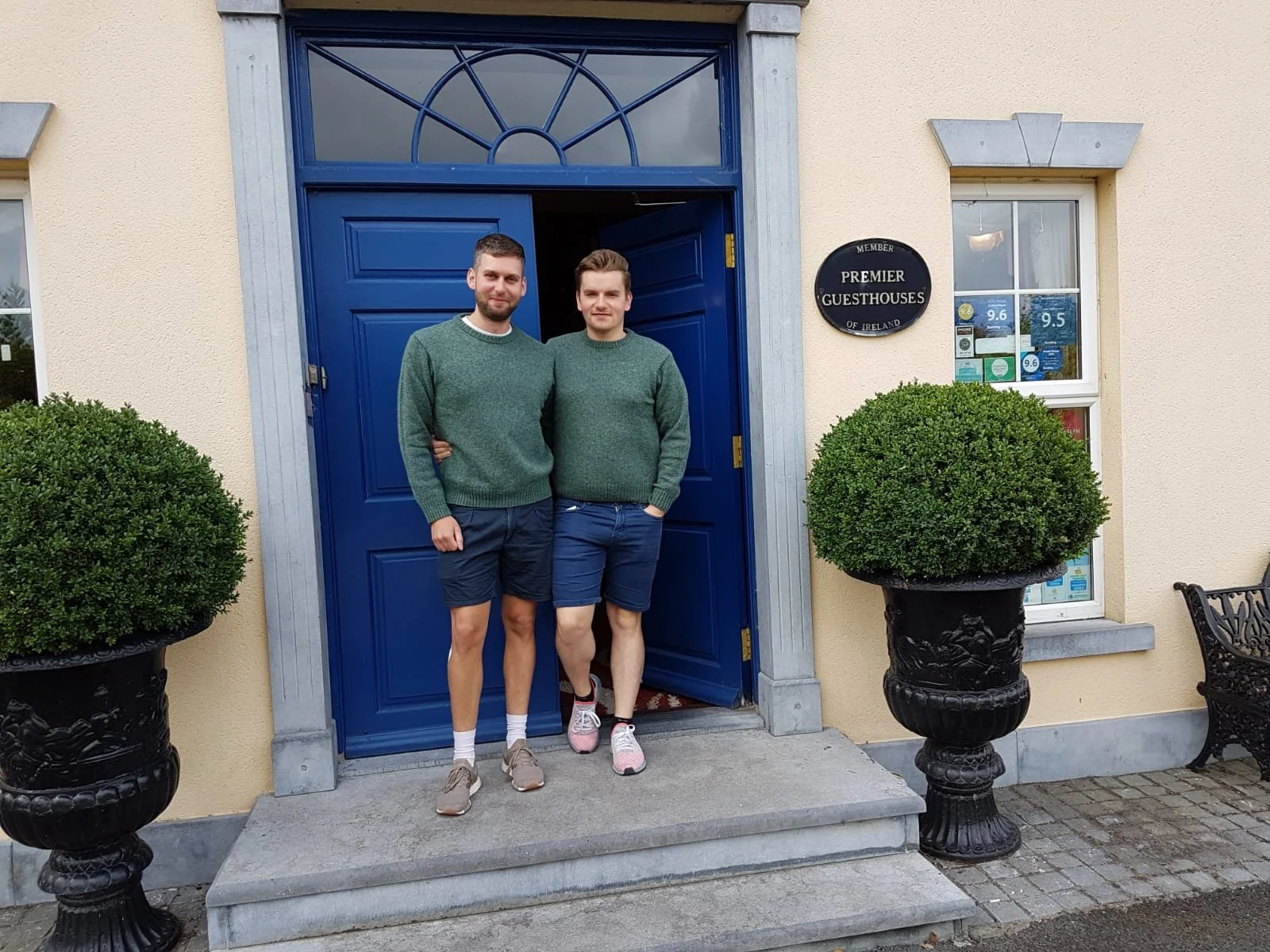
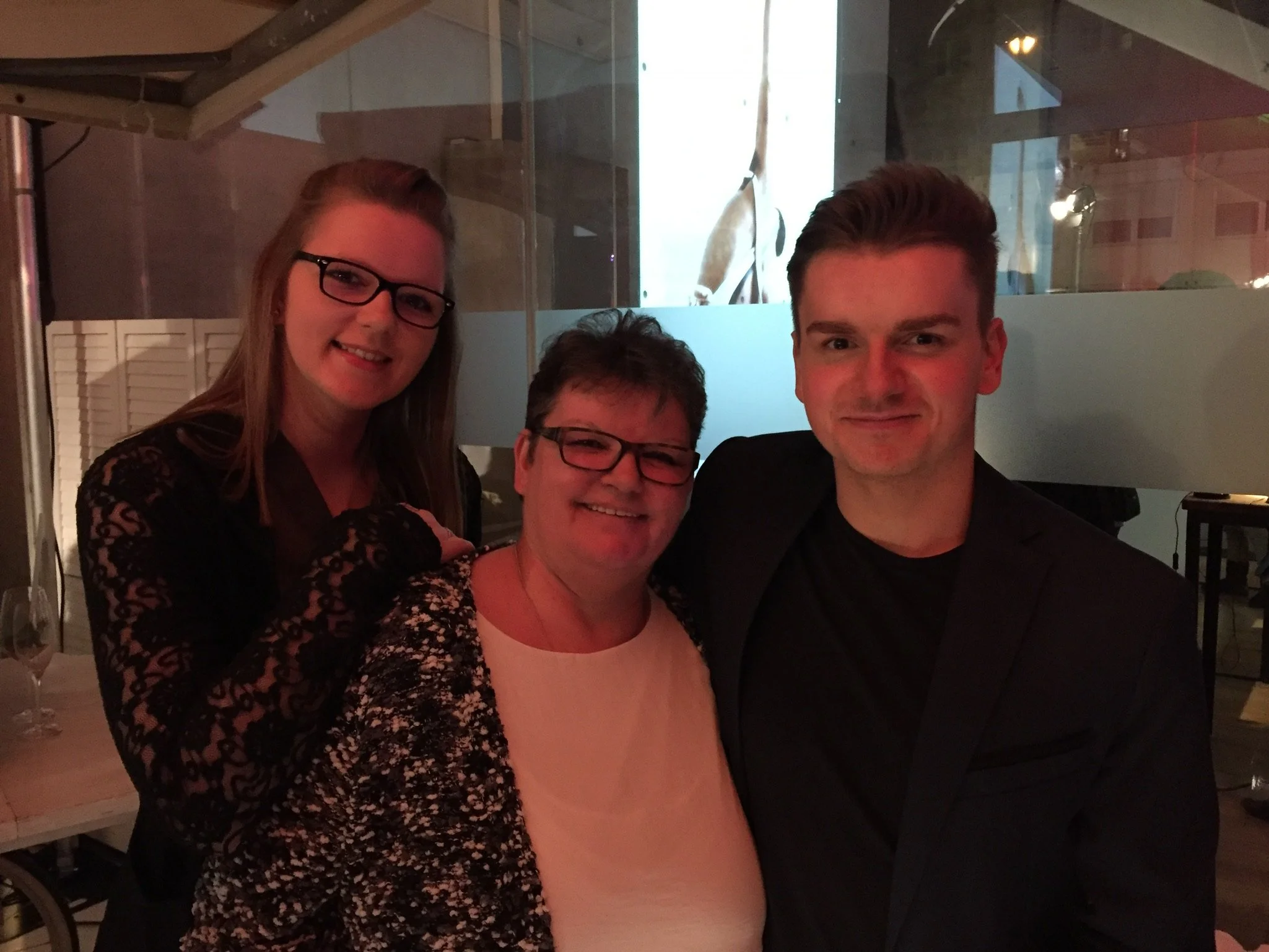
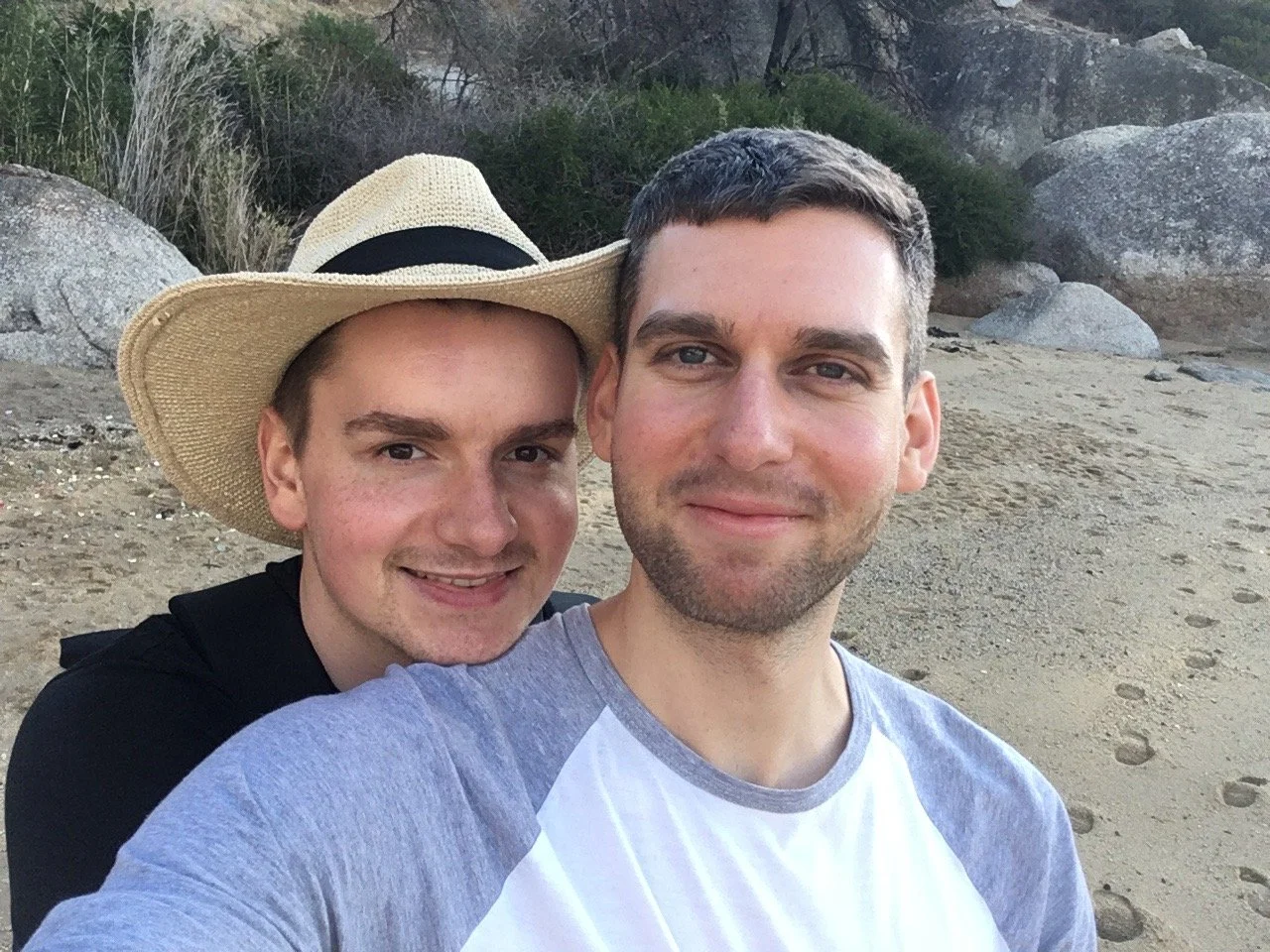
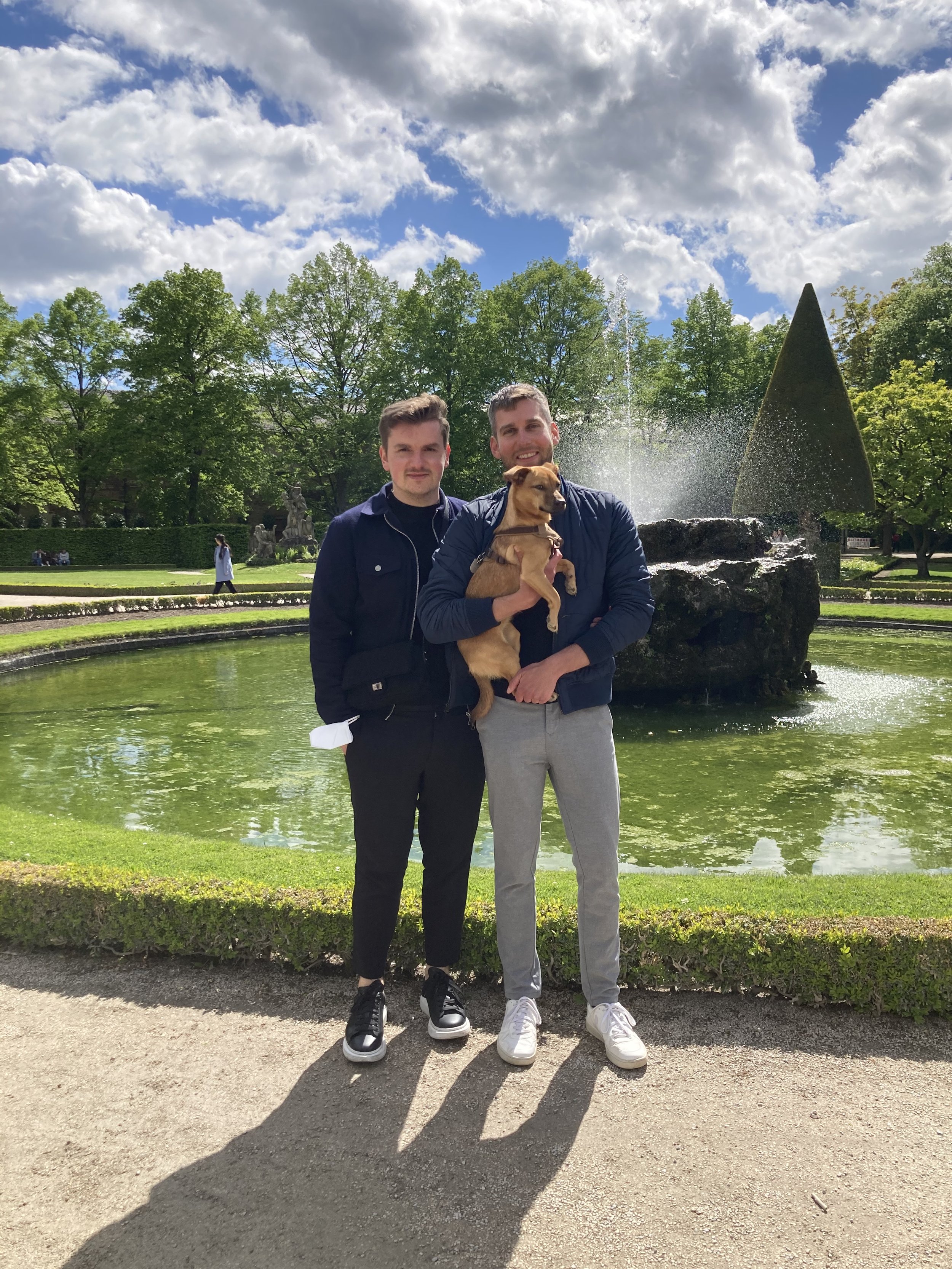
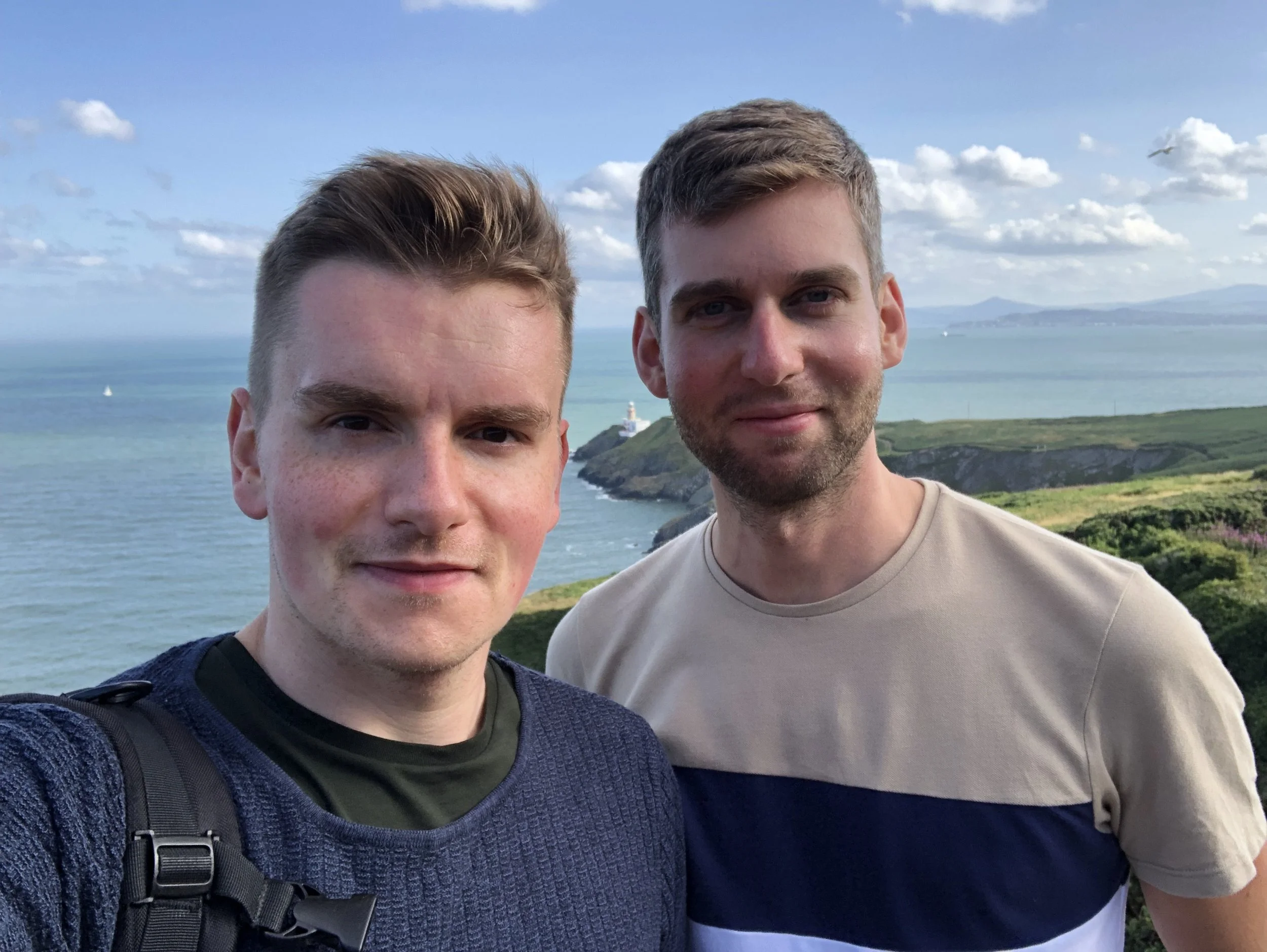
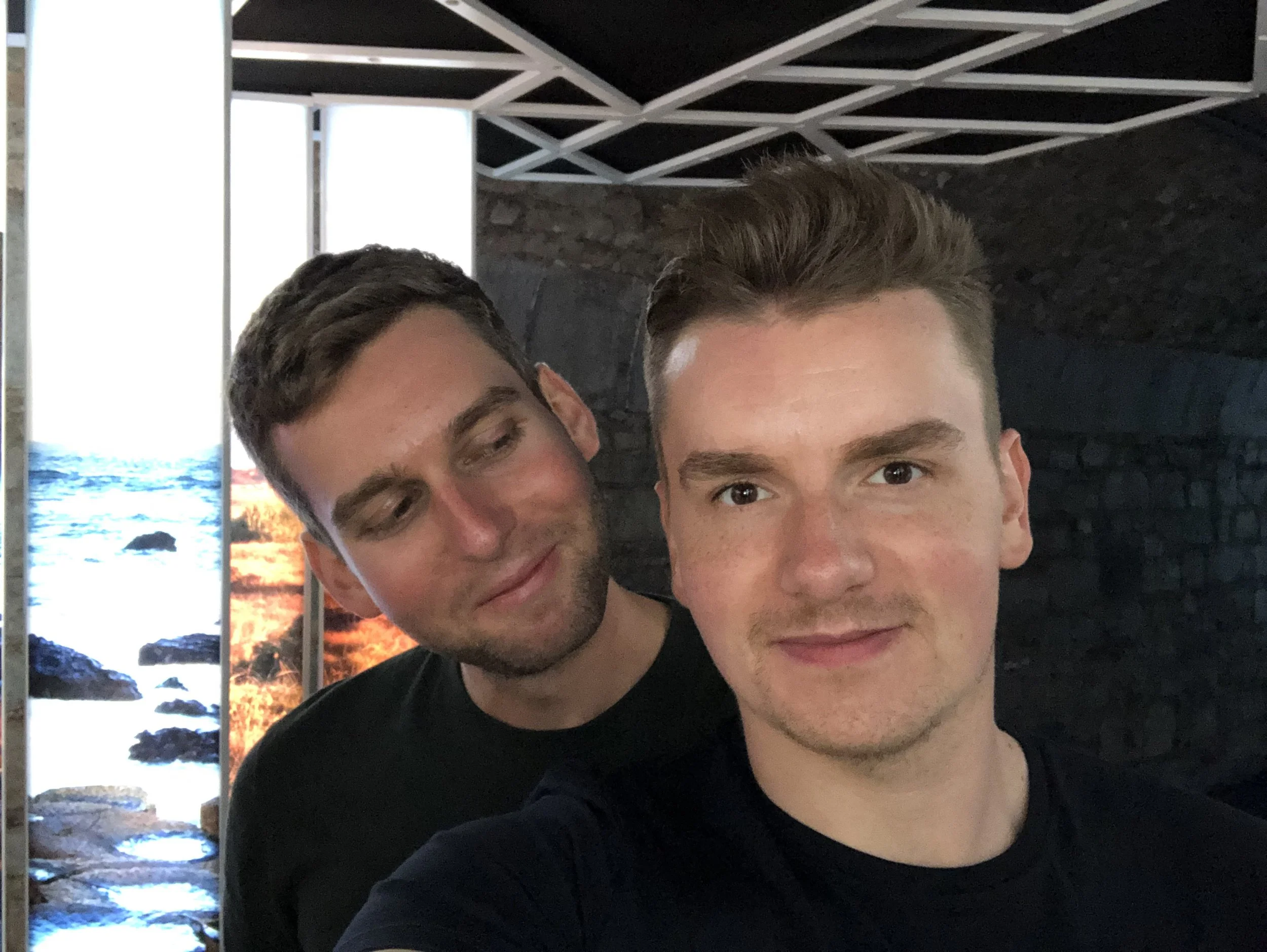
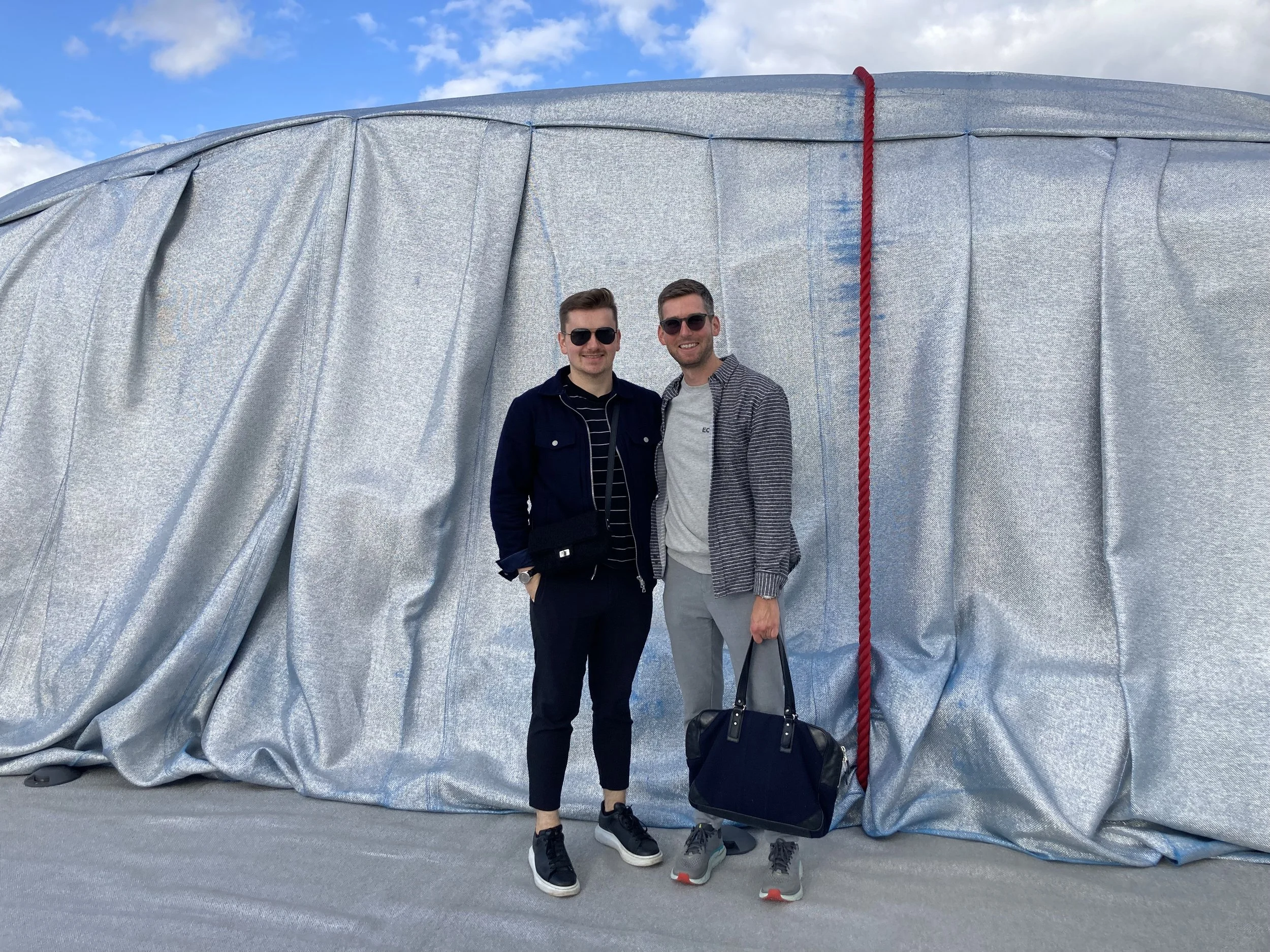
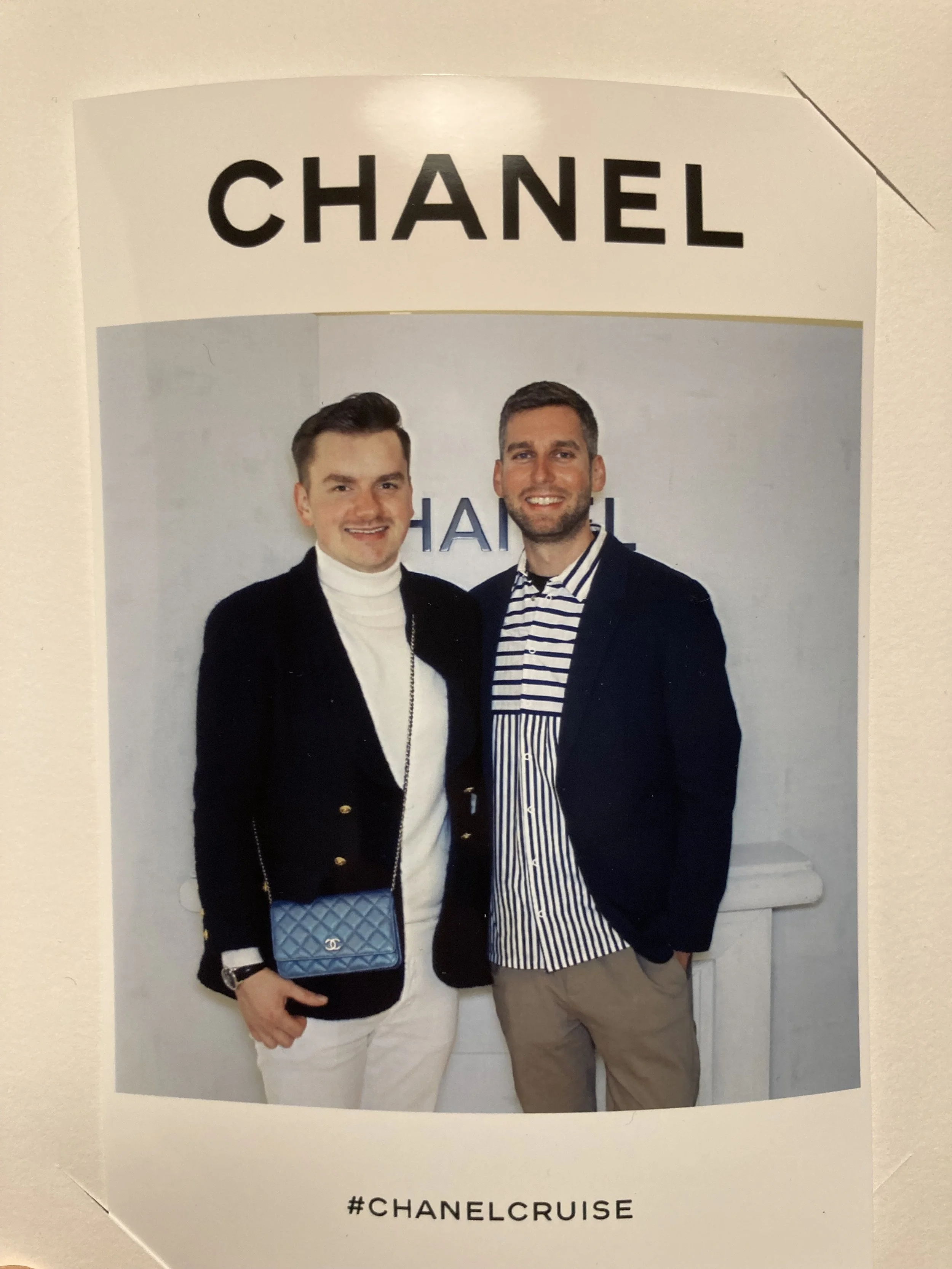
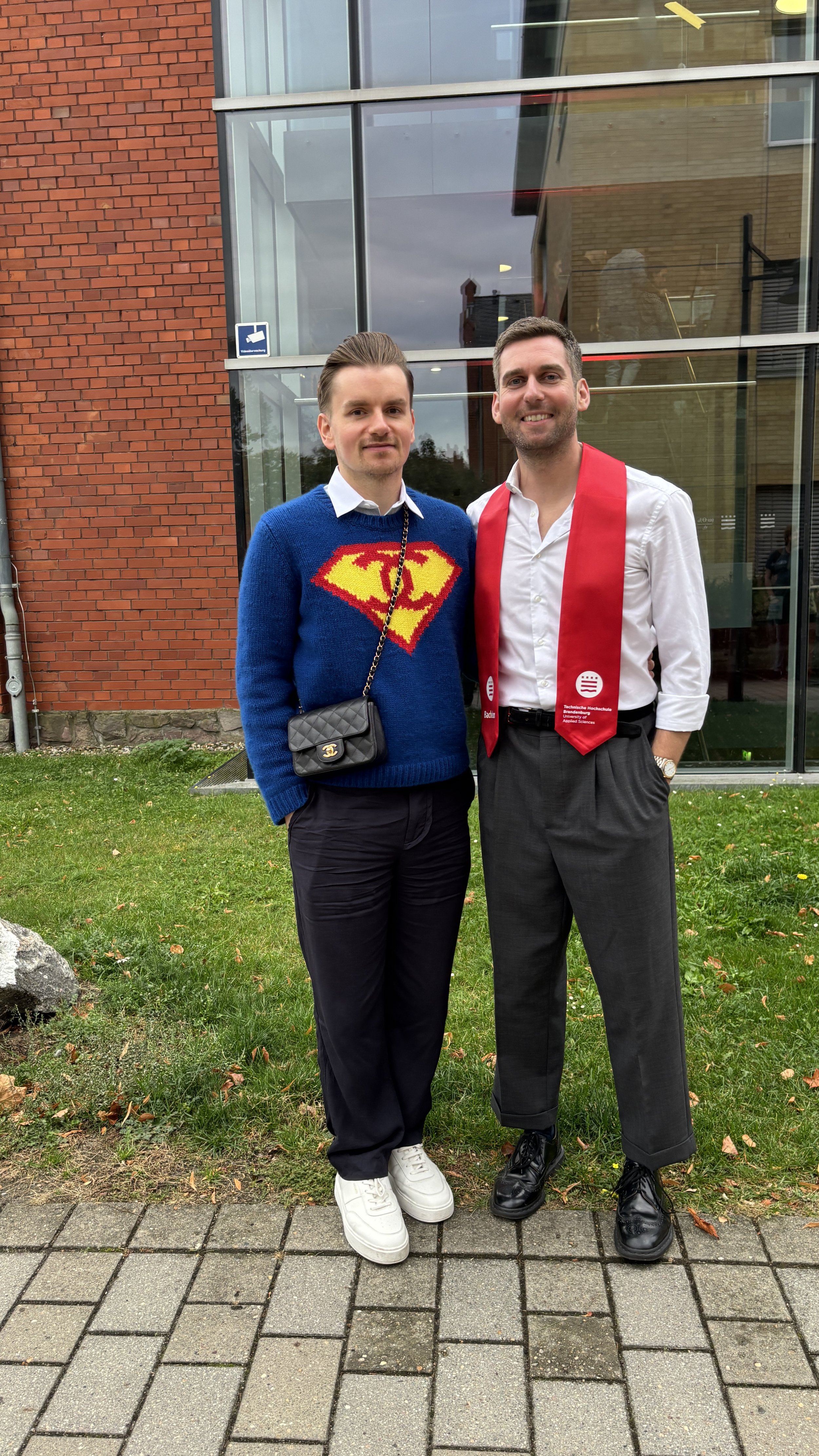
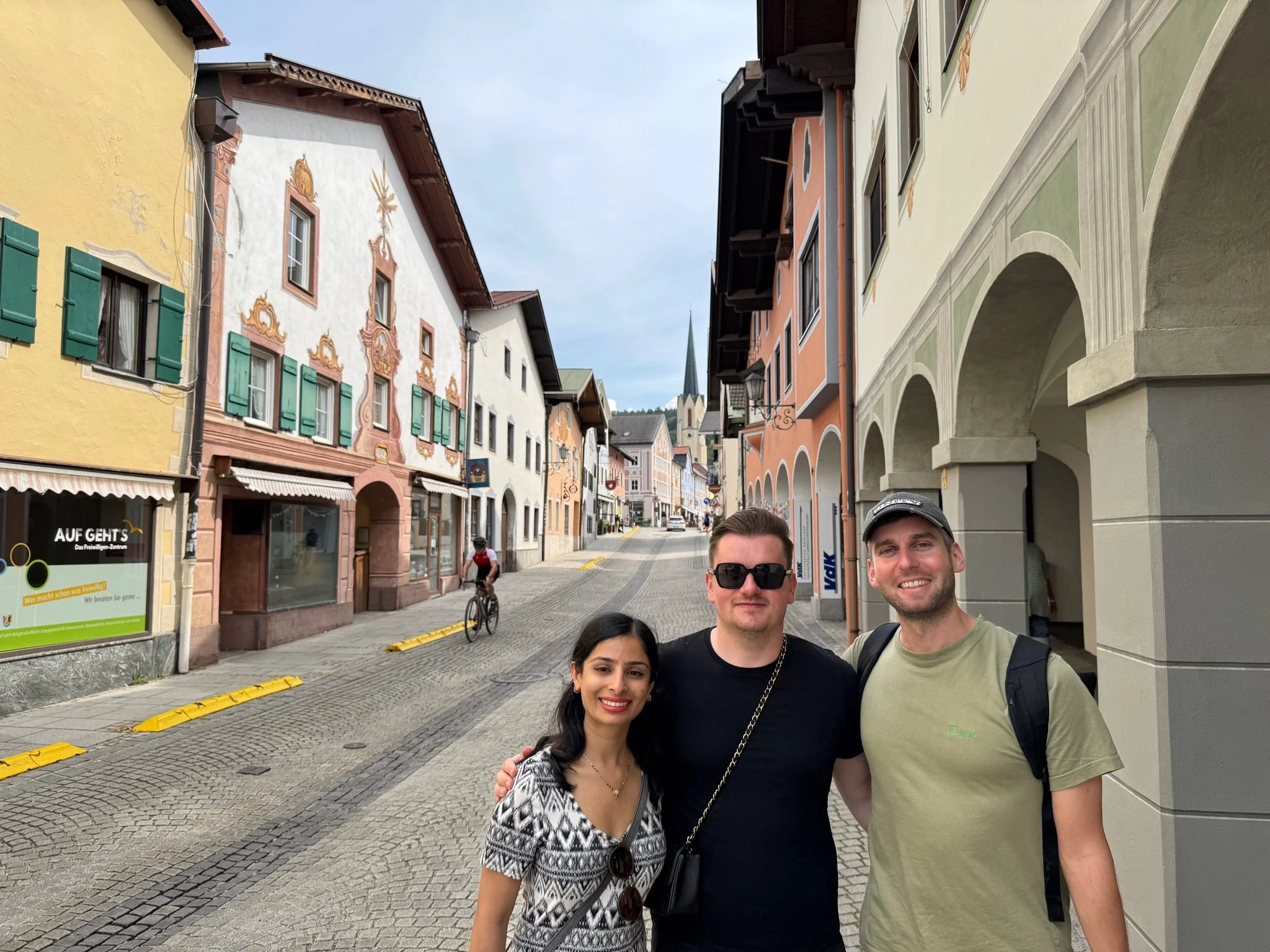
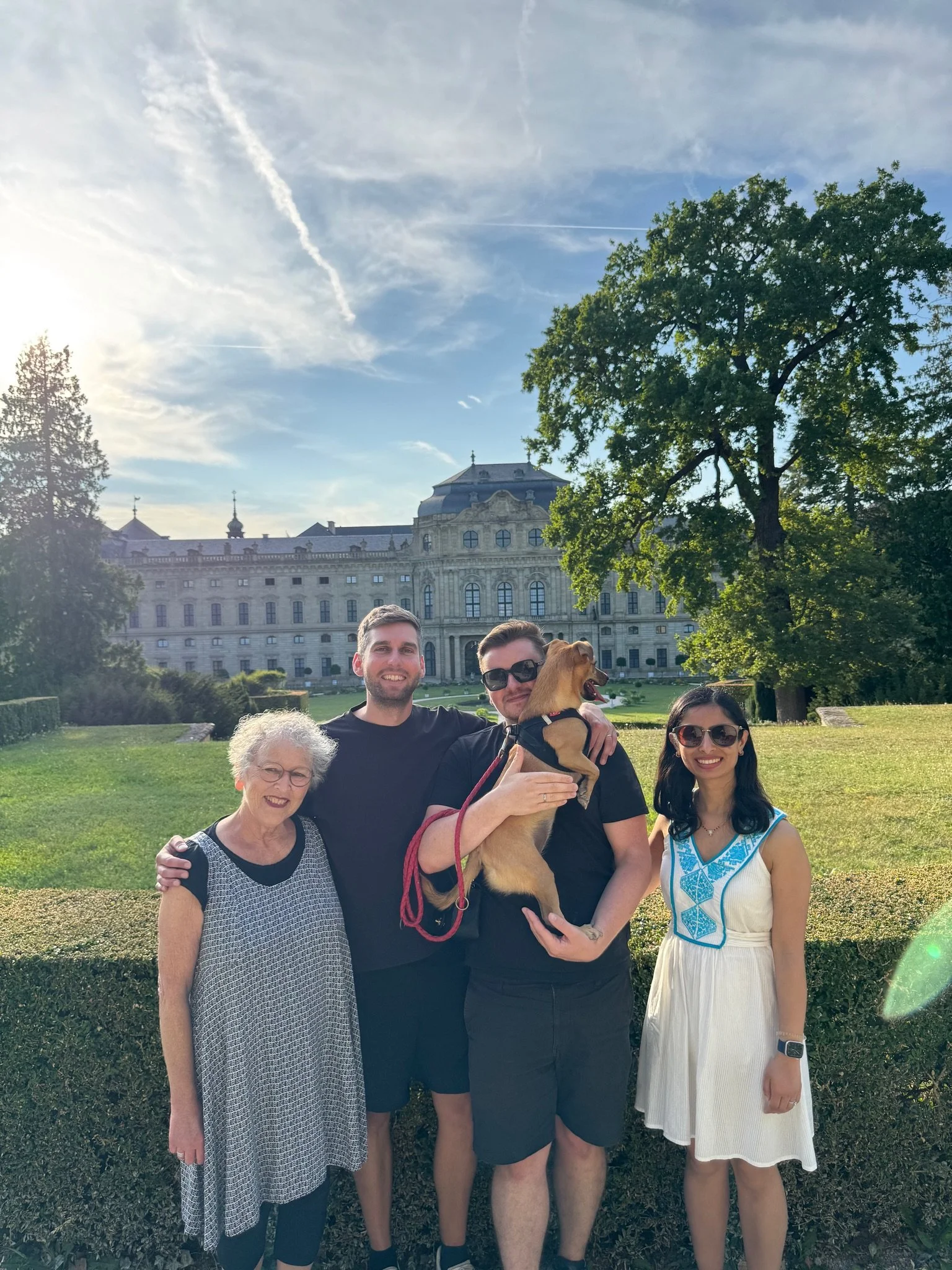
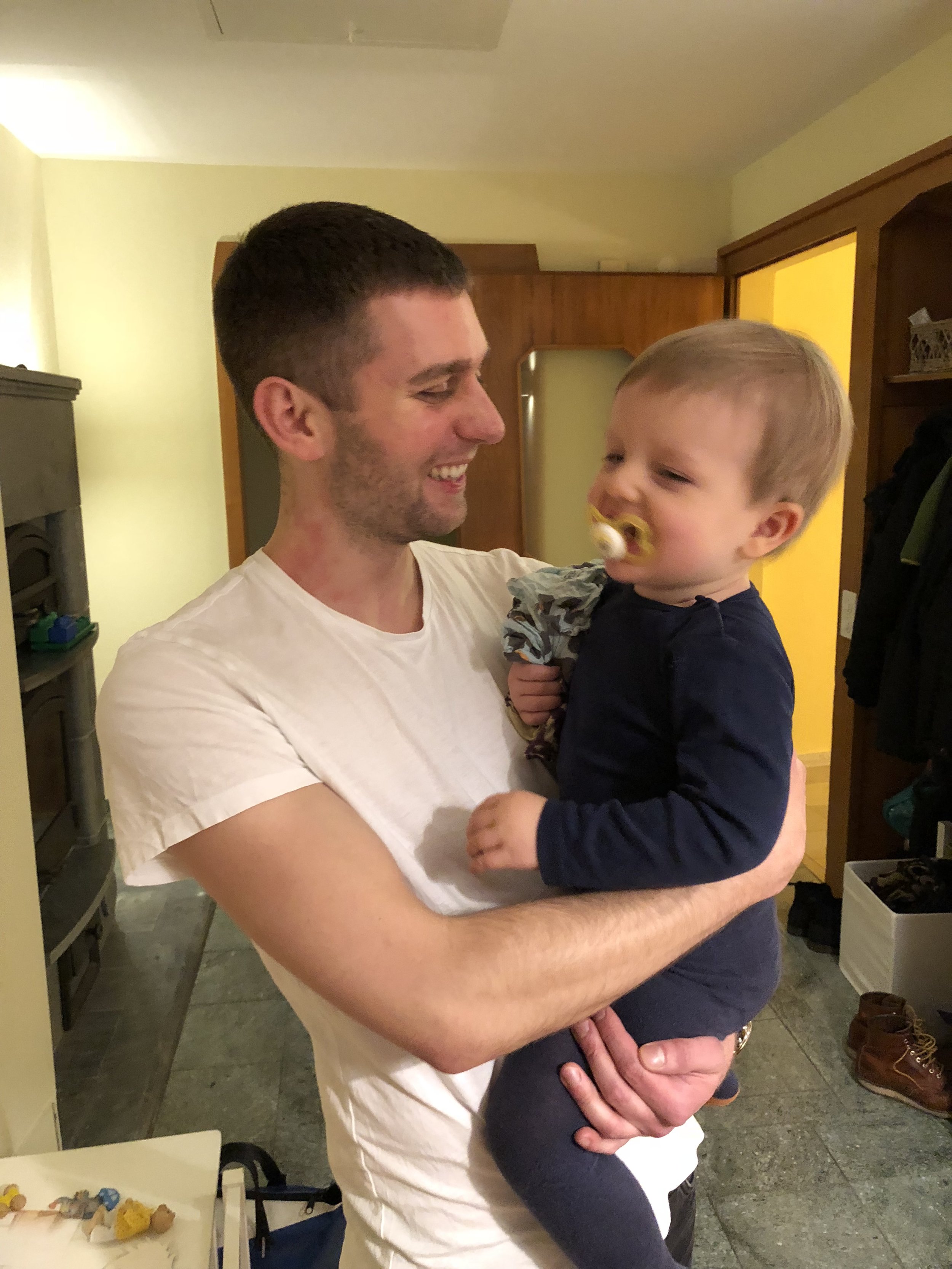
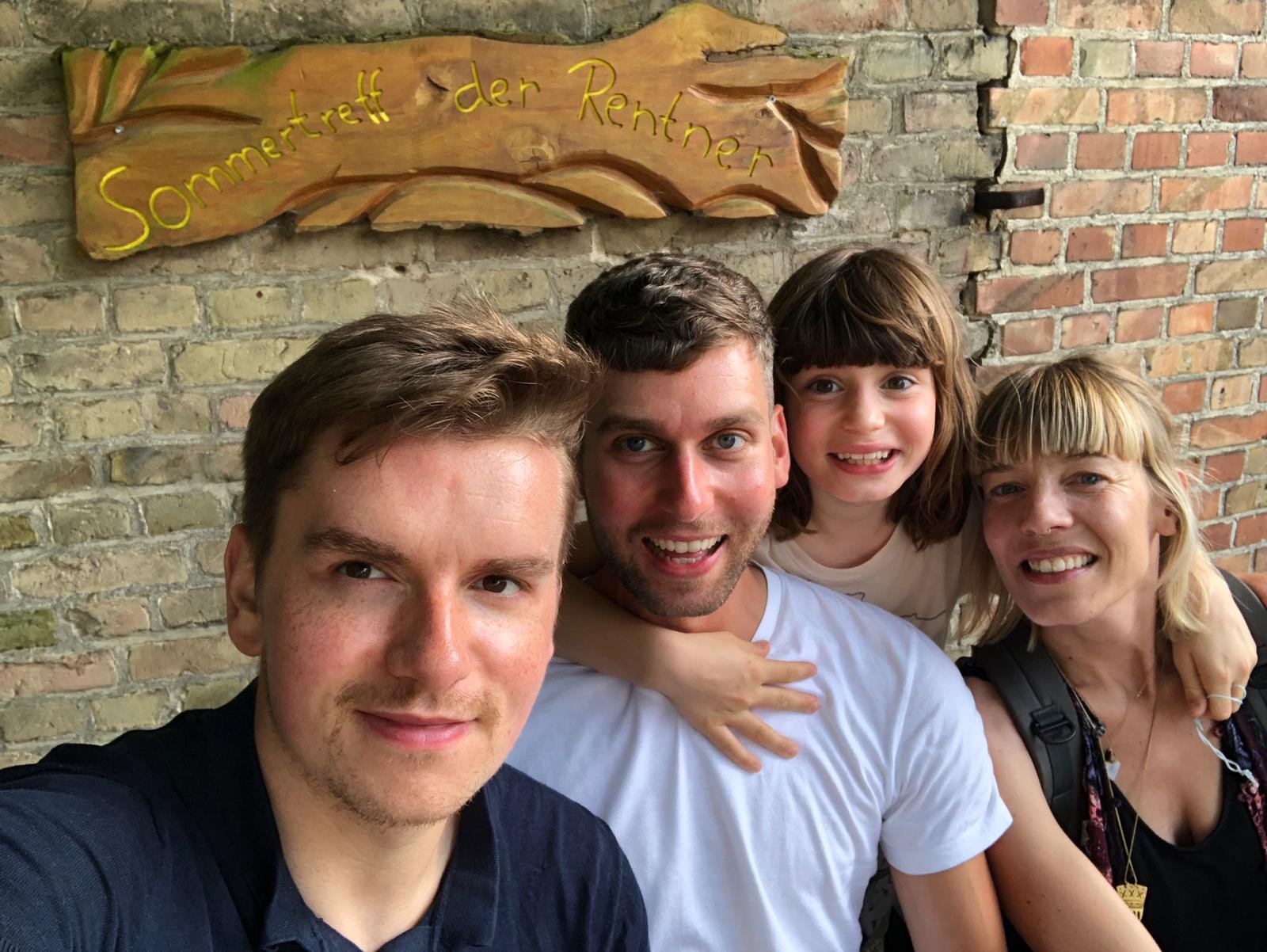
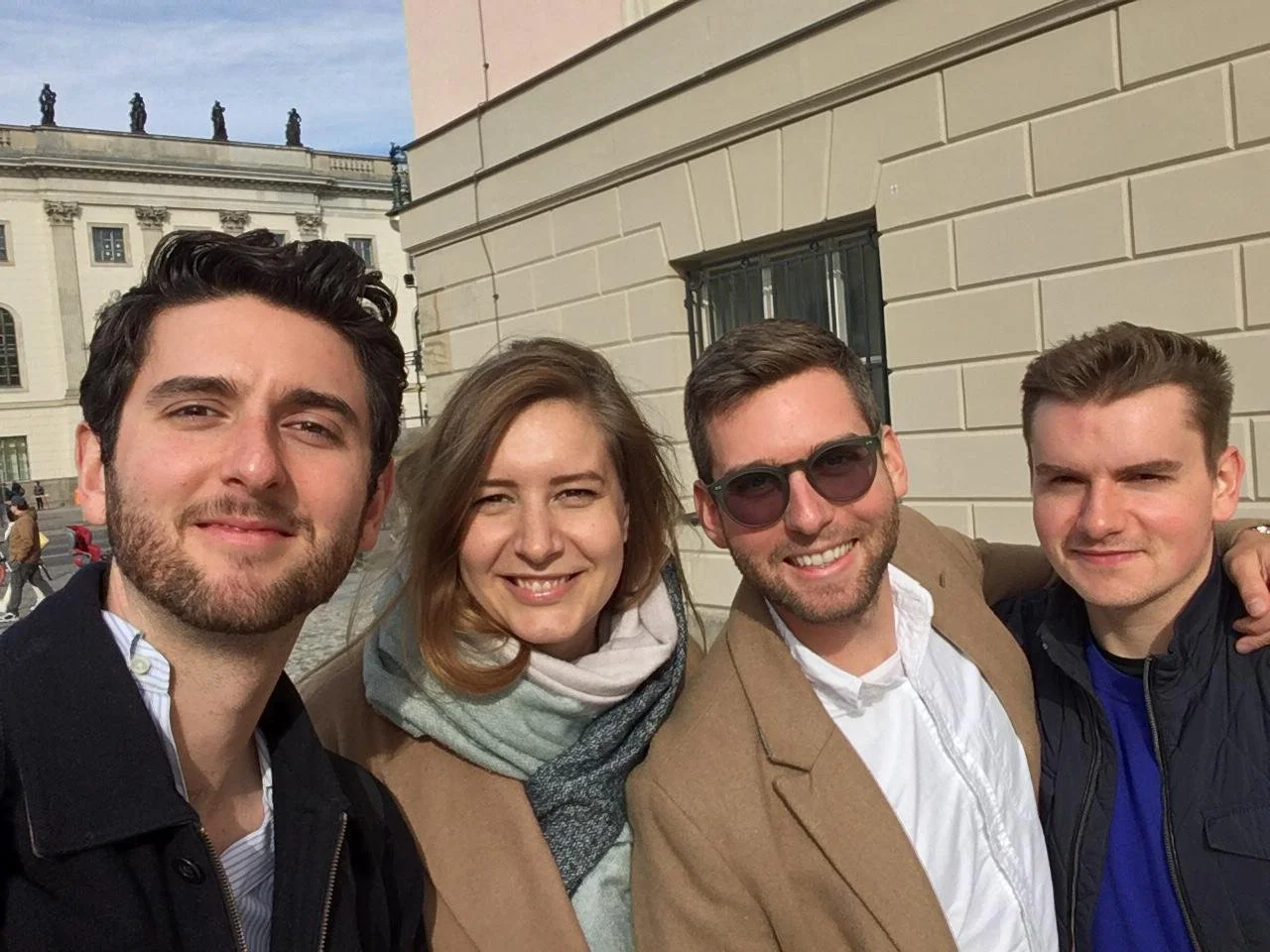
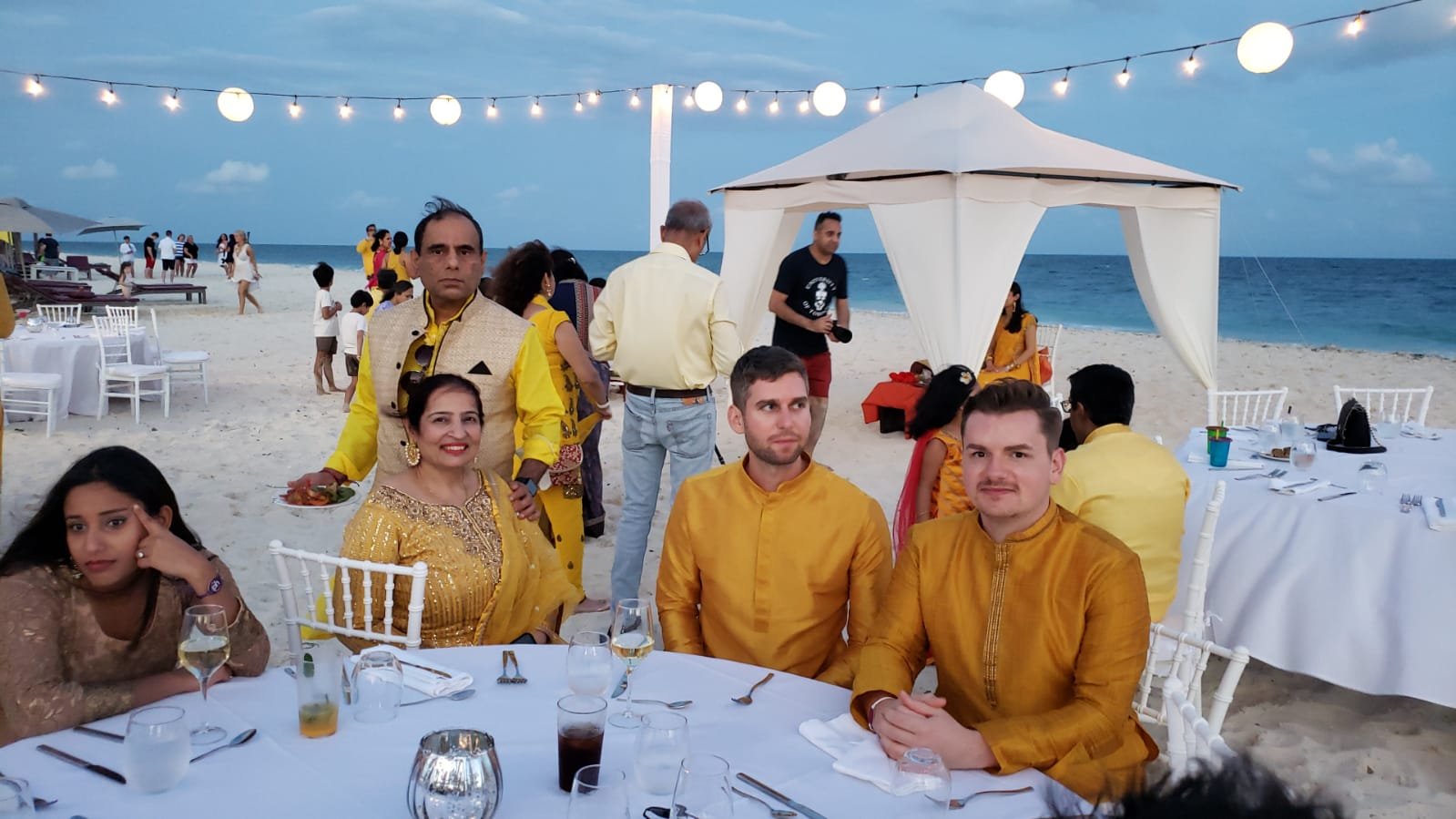
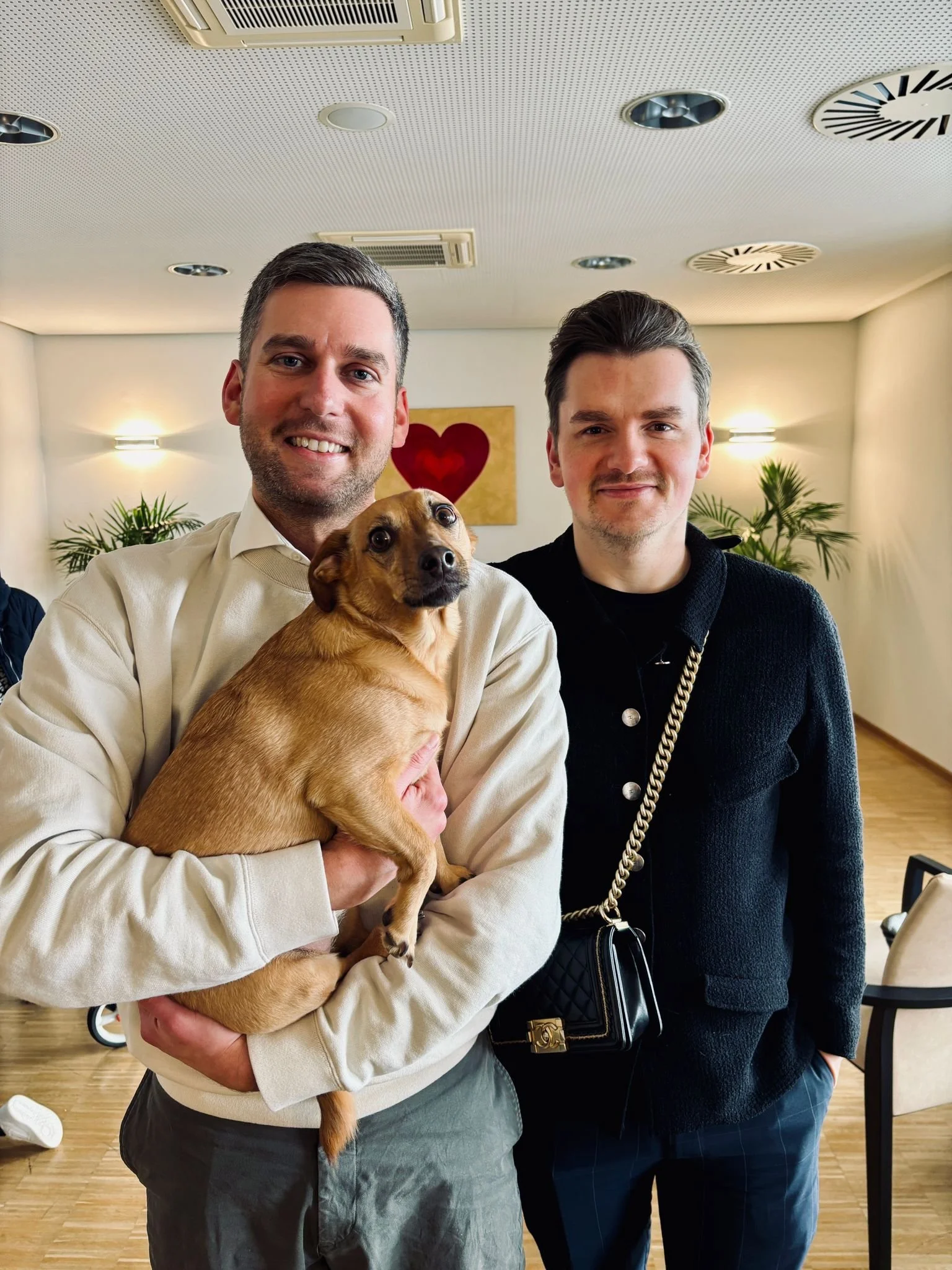
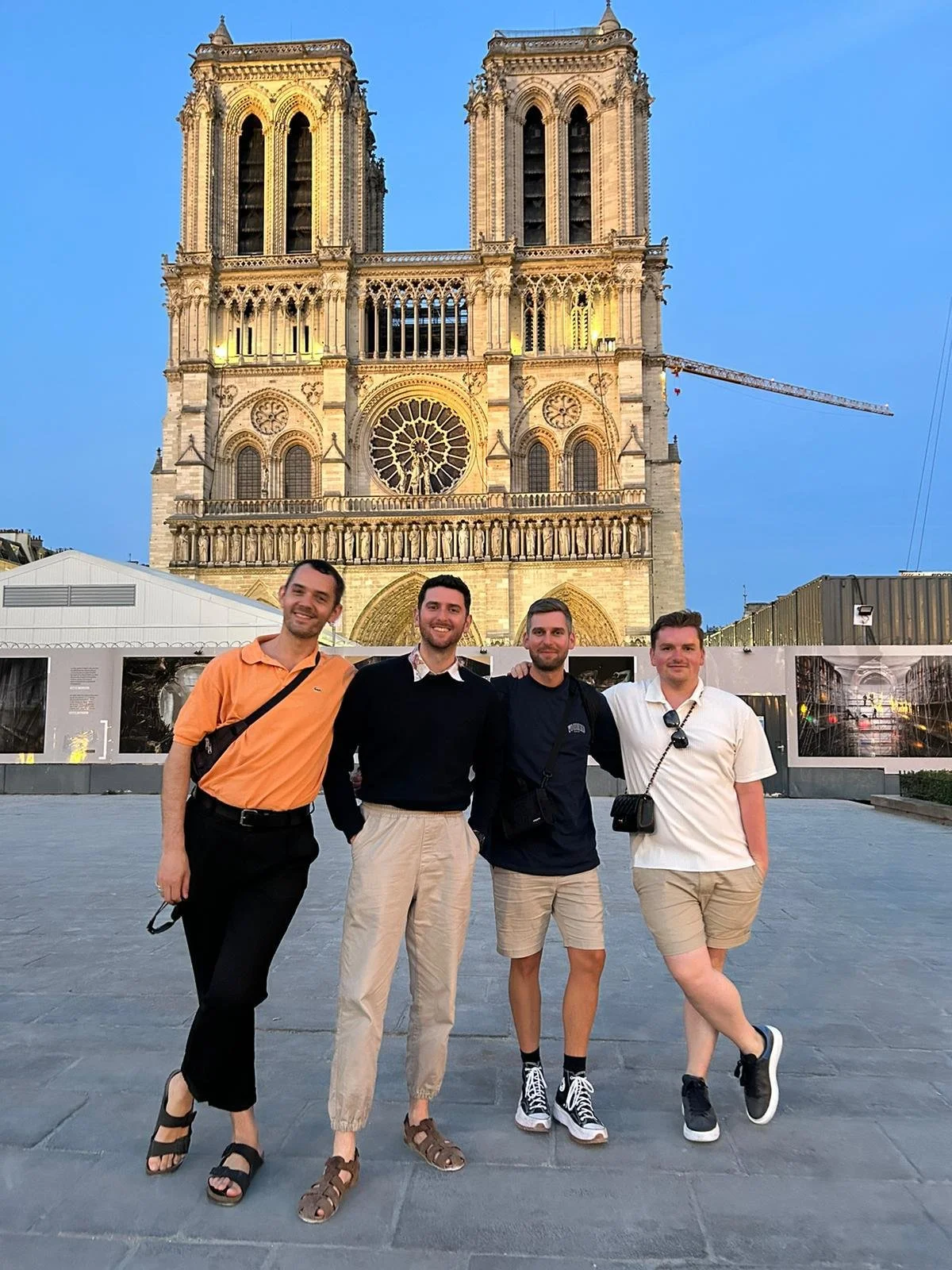
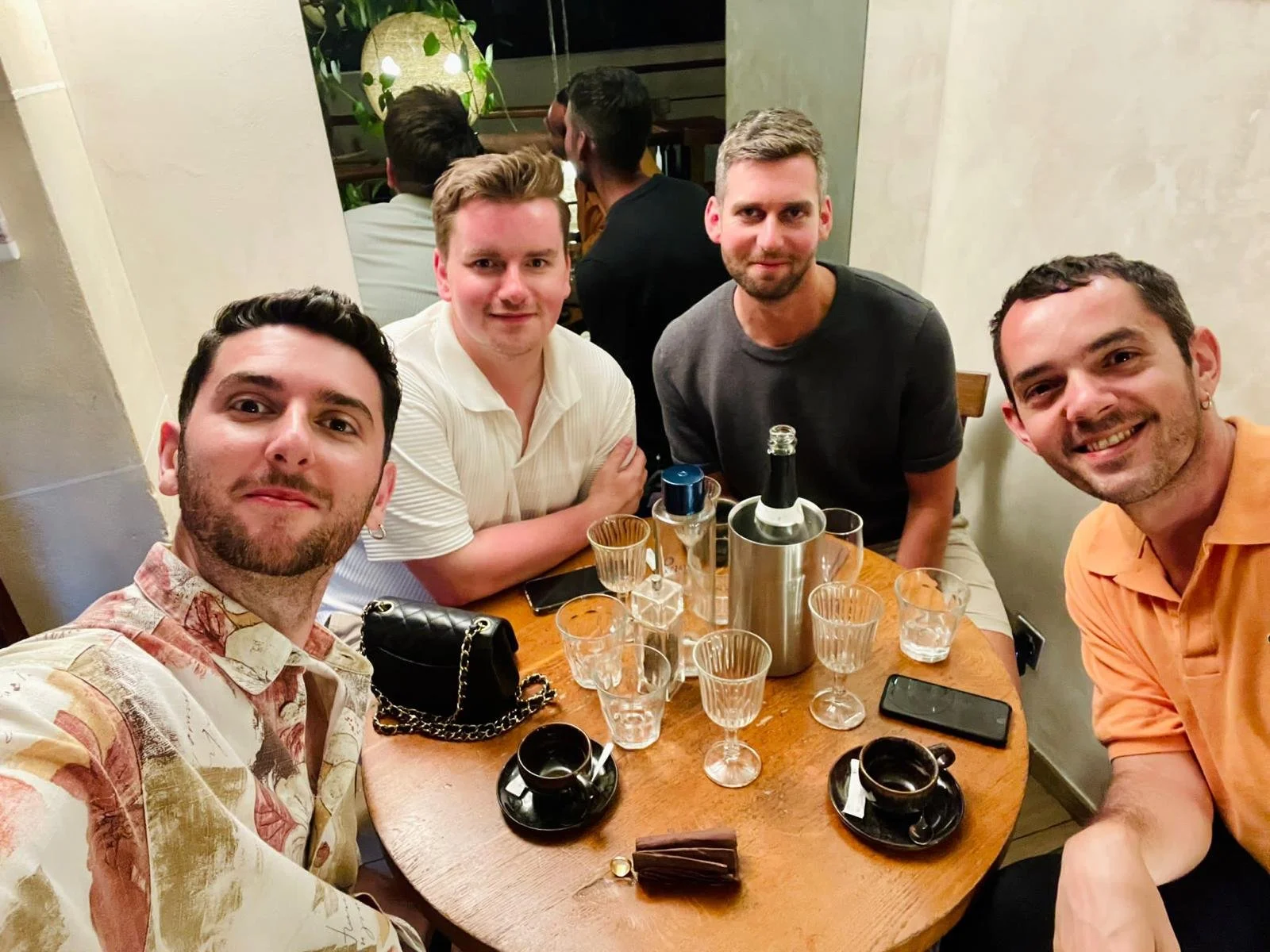
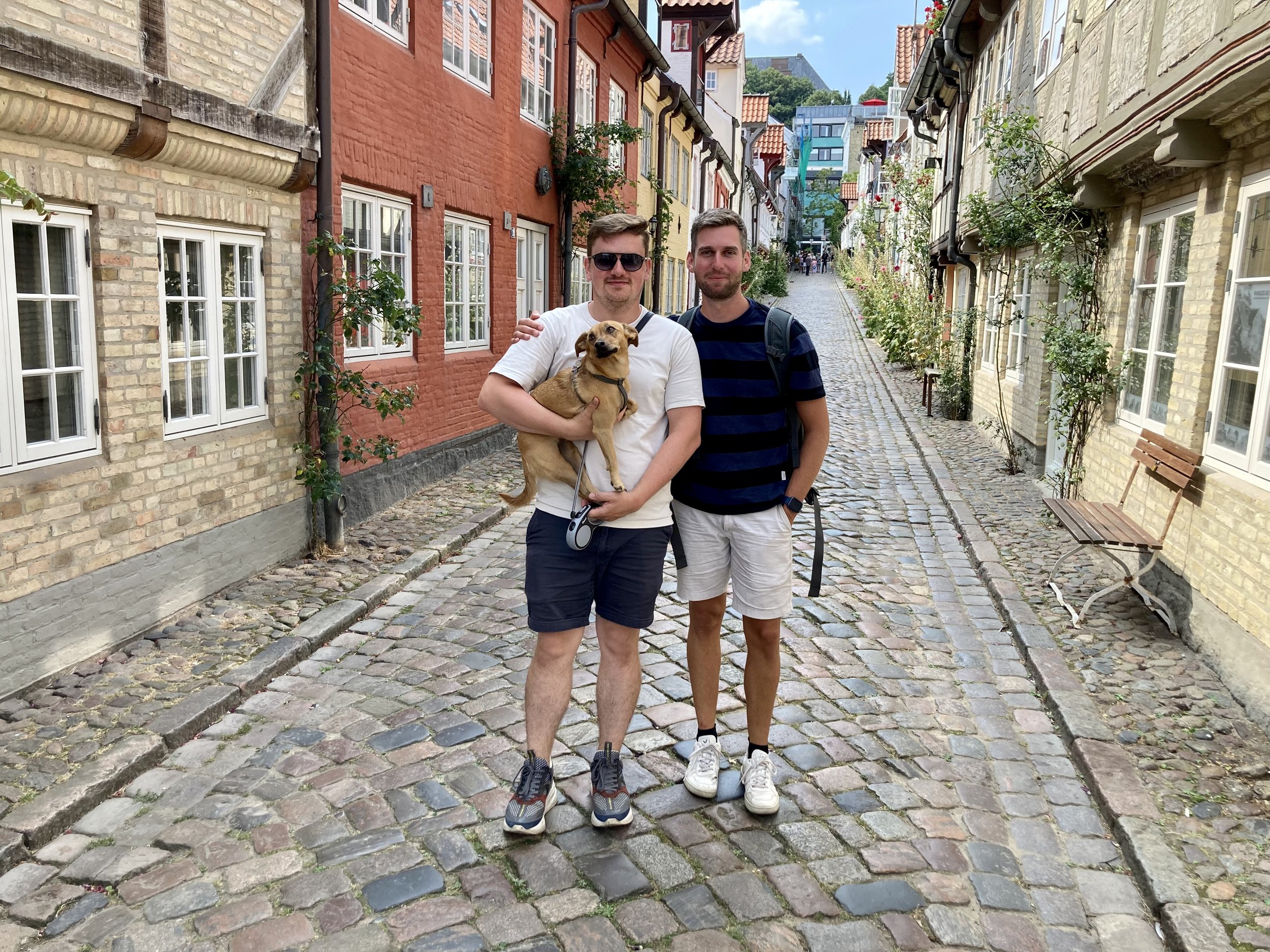
Lukas and Manuel
Location: Berlin, Germany
About Lukas
Date of Birth: May 2, 1985
Citizenship: German
Occupation: Hospitality Entrepreneur
About Manuel
Date of Birth: Sept 15, 1989
Citizenship: German
Occupation: Fashion Stylist
Medical Information:
General Health:
Both of us are in very good health. We were both screened thoroughly as part of the sperm donation process at VRC (full blood work and the complete panel) and we were each given a clean bill of health.
We stay rather active: Lukas is at the gym as often as he can manage and cycles everywhere, Manuel swims regularly. Neither of us smokes or takes drugs. Manuel does not drink alcohol at all, and Lukas very rarely.
Fertility Information:
We have six embryos, all PGT-A tested and cleared for transfer. They were created at VRC in June 2026, with both of us as genetic fathers. We are using donor eggs. Our donor is semi-known: she has agreed that our child may contact her once they turn thirteen. This was important to us. A child of two fathers will have questions and we want to be able to give them answers.
Yes, without hesitation. We have a guarantee with VRC which allows us to create more embryos if needed and we would happily fly over again for that.
Fertility Clinic:
Victory Reproductive Care, Windsor, ON
Why are you looking for a Surrogate?
We are a same-sex couple, so surrogacy is the path that lets us both be biological fathers and be part of our child's life from the very beginning. We talked about having children on our very first date ten years ago and it never left the table. We chose Canada deliberately. The altruistic model means someone is doing this because they genuinely want to, not as a transaction. That difference matters a great deal to us.
Tell us about your family & loved ones.
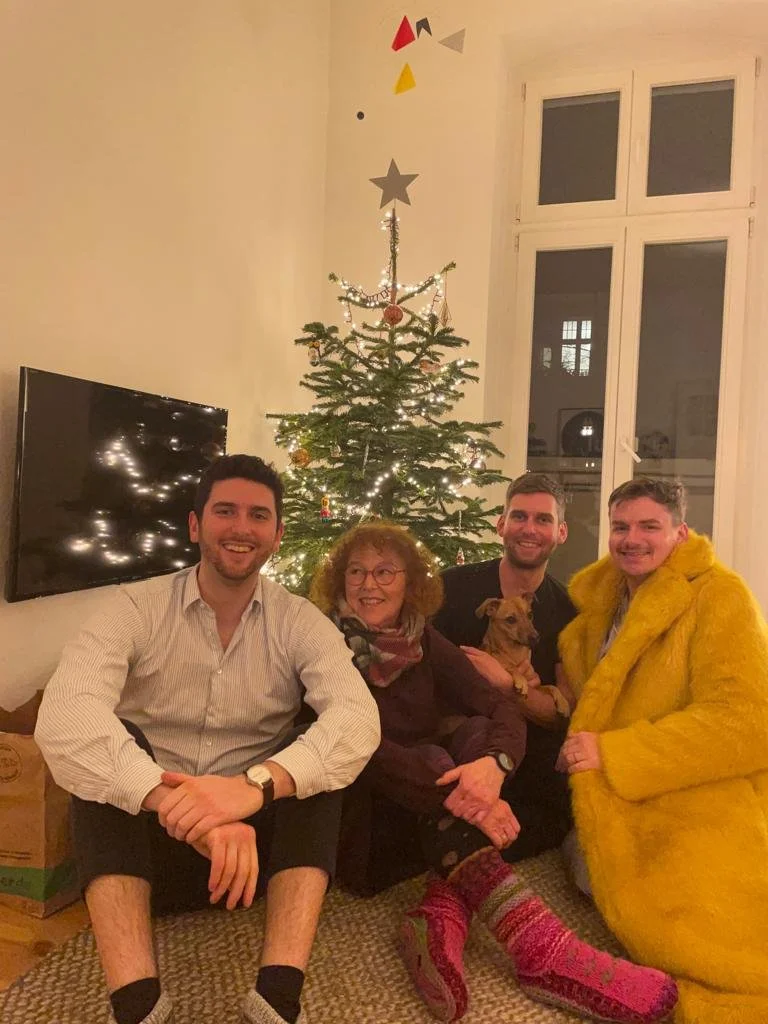
Our parents are genuinely excited. Lukas' mother moved to Berlin this year to be closer to us and she has already told all her friends that there might be a little one in the family soon. For a while she had the feeling that her friends were holding back when they talked about their grandchildren, because she did not have any yet. She always told them not to worry, that she loved hearing about theirs. But of course she is delighted at the thought of one of her own.
Lukas' father has remarried and his wife's daughters already have children, so he has had a taste of what being a grandfather is like. This one would be the first from his own children and he is really looking forward to it.
Manuel's mother retires next year. She travels to Bremen constantly to help look after Manuel's sister's two boys, and she has already said she would love to support us in the same way, as has Lukas' mother.
Lukas's brother has said he does not want children of his own, but he is very much looking forward to being an uncle. Manuel's sister Sabrina has two young boys and loves the idea of the three of them growing up together. She lives in Bremen, which is not far from us, so there will be plenty of back and forth and family gatherings. The cousins will grow up knowing each other.
We’ve told a small circle of people right from the start, and everyone we have told is genuinely so happy and curious. They keep asking how things are progressing and because sooo much has happened in the last few months, we have always had something new to tell them.
Would you like to attend appointments with your Surrogate?
We would like to be as involved as she is comfortable with, and we will take her lead on that. We hope to attend as many appointments as possible, mostly by video call, since we are based in Germany, and in person whenever we can travel. The first ultrasound would mean a great deal to us if she is happy for us to be there.
What are your thoughts on termination of a pregnancy due to genetic abnormalities or complications related to the pregnancy?
Our starting point is simple: the safety of our surrogate comes first.
If her life were ever in danger, the decision is clear for us. We could not live with a situation where our child came into the world and she did not survive it. That is not something we could ever carry.
If a pregnancy posed serious risks to her health without being life-threatening, the decision would be hers. It is her body, and she is the one who would live with the consequences. We would support whatever she decides.
Where a finding concerns only the child, we would see the decision as ours, taken in close conversation with her. We are the ones who will raise this child and live with the situation for the rest of our lives, so we feel it has to be our call. But we would never make it without listening to her first.
With that said, our embryos have been PGT-A tested and we both completed genetic carrier screening, so the most common chromosomal findings are largely behind us. What would remain are structural findings that only become visible later in the pregnancy. We cannot honestly give you a fixed list of diagnoses we would or would not continue with, because so much depends on severity and prognosis in the individual case. What we can say is how we would approach it: we would want full information from the doctors, we would talk it through with our surrogate, and we would be guided by what the child's life would realistically look like, not by the label of the diagnosis.
If the Surrogate becomes pregnant with multiples, how would you feel? How do you feel about the possibility of selective reduction being recommended due to a multiple pregnancy?
Honestly, twins would not be bad news for us. We have always wanted two children, so in a way it would mean two wishes coming true at once.
Our clinic only ever transfers a single embryo, so the only way this could happen is the embryo splitting on its own, which we understand sits somewhere around one to two percent. We also know that an identical twin pregnancy carries more risk and would be more demanding for our surrogate, so we would not treat it lightly.
On selective reduction, the same principle applies that we described above: if the pregnancy posed a risk to our surrogate, the decision would be hers. If it concerned only the children, we would decide in conversation with her and be guided by medical advice. We would not want to commit to a fixed position in advance on something that depends so heavily on the individual situation.
Are you vaccinated for Covid-19? Do you have a preference for a Surrogate to have been vaccinated for Covid-19?
We are both vaccinated and boosted. We would have a mild preference for a surrogate who is vaccinated as well, partly because we will certainly be vaccinating our child. That said, it is not a hard requirement. What matters more to us is being able to talk about it openly.
What kind of relationship do you want to have with your Surrogate during the pregnancy?
We would like to be as involved as she is comfortable with and take her lead on that. Ideally we would be in regular contact: calls, messages, whatever rhythm suits her. And we would like to travel to Canada for milestones. For the birth, we plan to arrive in the weeks leading up to delivery so we are close by rather than rushing in at the last minute, and to stay for at least a month afterwards.
What we hope for most is a real relationship. She is not providing a service to us; she is helping us build our family, and we do not take that lightly or for granted.
Do you want to be in the delivery room when your child is born?
We would love to be there if she is comfortable with it. If she would rather not, we will completely respect that, it is her birth.
What kind of relationship do you hope to have with your Surrogate after the birth of your child?
We would love to stay in touch and keep her updated on how our child is doing, for as long as she would like that. We have friends in Toronto, so we will be coming back to Canada. And if she were open to it, visiting her would be something we would genuinely look forward to. In our minds she becomes part of our family's story permanently, not just for nine months.
Would you be open to a home birth?
A home birth is imaginable for us, provided it is safe for both of them and a hospital is within reach if anything happens. What matters most to us is the conversation: we would want to understand why she prefers it. A hospital setting gives us a sense of security, but if a home birth is genuinely important to her, we will listen. We want everyone involved to feel comfortable, not only us.
Are you open to midwifery care?
We have no objection to midwifery care. Our instinct leans slightly towards obstetric care, simply because the safety of our surrogate and the baby comes first for us. But if midwifery care is what she is comfortable with and a hospital is close by, we are open to it.
Would you like your Surrogate to provide breastmilk?
No, and mainly for practical reasons. We live in Germany, so we will only be near our surrogate for a few weeks after the birth. As soon as it is safe for the baby to fly, we will travel home. We will bring formula from Germany with us for the first few weeks. Formula feeding is entirely unproblematic these days, so this is not something we would ask of her.
What will you tell the child about the Surrogate, and the circumstances of their birth? If the child asks to meet the Surrogate, how will you feel?
Everything, and from the very beginning. We want this to be a story our child has always known, told in age-appropriate pieces from the start, so there is never a moment of revelation and never a secret that has to be broken. And we want to tell it as something good: our child exists because several people wanted them very much, and because a woman was willing to do something extraordinary.
We would be happy if our child asks to meet the surrogate, and glad that our child felt safe enough to ask. Our child will grow up knowing their story and knowing that there was a woman who made our little family possible. If they want to meet her, we would love to make that happen, in whatever form feels right for her and for our child.
If the transfer is unsuccessful, will you want to try again? If so, how soon after?
Yes, we would absolutely want to try again. The deciding factors for us would be whether it is medically safe and whether our surrogate feels ready, both for trying again at all and for the timing. Much would also depend on why the transfer did not work. We would never want to push for a second attempt before she is comfortable with it.
If this surrogacy journey is successful, would you want to complete a sibling journey? What do you envision that looking like? (timeline, same Surrogate etc.)
Yes, definitely. We both grew up with siblings, and we would very much like our child to have one too.
If it were an option for her, we would love to do a sibling journey with the same surrogate. By then there would already be a relationship, and the whole process would feel more natural. There is something lovely about sharing that history with the same person.
In terms of timing, we imagine somewhere between one and five years after the first birth.
What are your plans for childcare once the child is born?
We are both self-employed and both work from home, so we have a great deal of control over our own time. We do travel for work occasionally, but it is always something we can plan around.
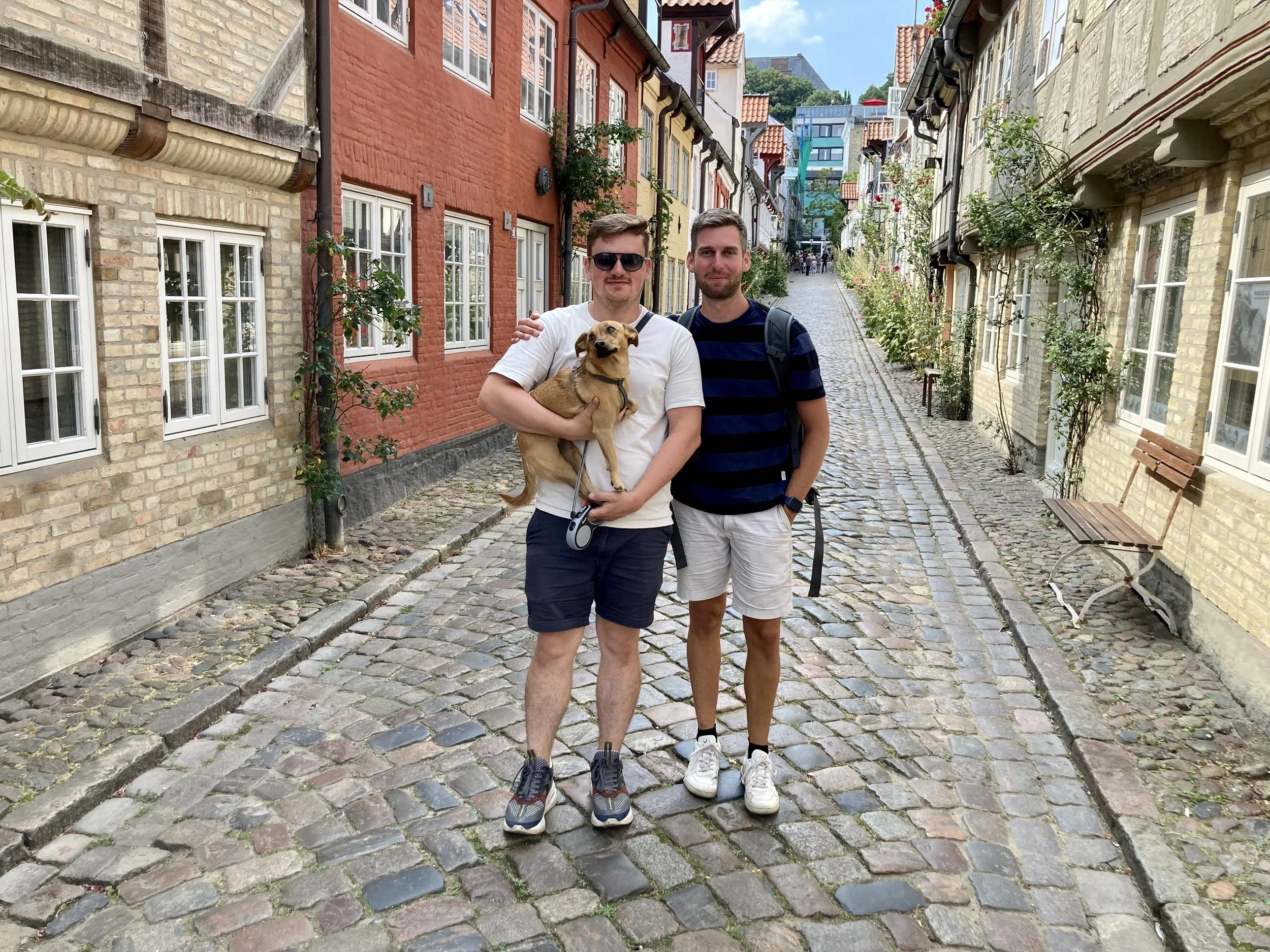
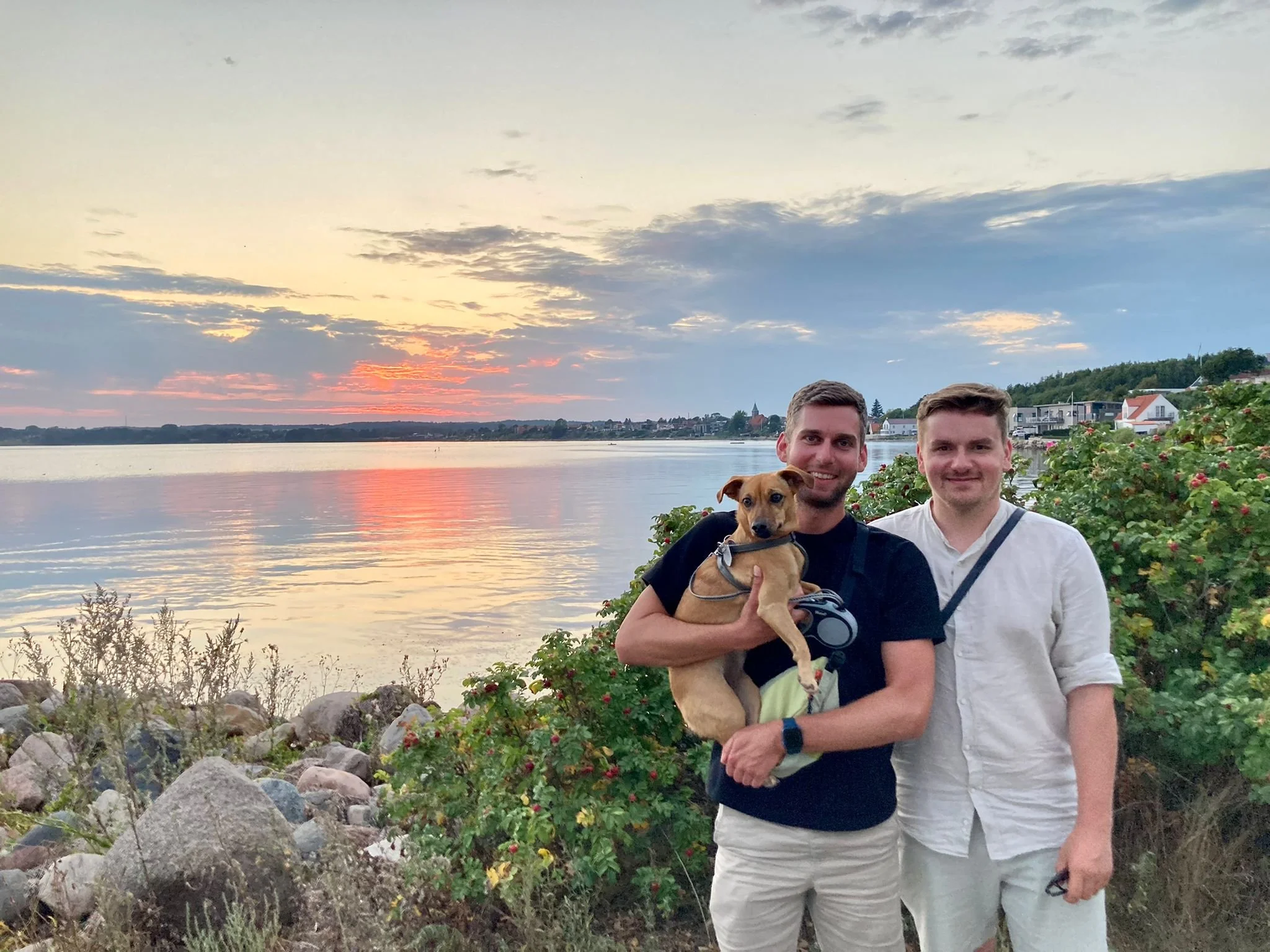
Goldie, our dog, is practically never left on her own, so our days are already built around being at home. A child would fit into that rhythm rather than disrupt it. We are looking forward to long walks with the three of us and Goldie.
We also have family close by. Lukas's mother lives in Berlin, and Manuel's mother retires next year. Both have already said they would love to help.
Beyond that, childcare in Germany is well organized. Every child has a legal right to a daycare place from the age of one, and in Berlin daycare is free. We live in a lovely part of the city with plenty of playgrounds and daycare centers nearby. Social contact matters a lot to us, we want our child to grow up around other children of the same age, so they will go to daycare in the mornings as early as we can arrange it.
What does a typical weekend look like for you?
Because we are both self-employed, we do not really have typical weekends, which we rather like.
If nothing is on, we stay home. On a grey Berlin day that means burrowing into the sofa or back into bed with a few good films. When the sun is out we take Goldie for long walks, around the city or out into the countryside.
Right in front of our building is the Winterfeldtplatz market, which we love going to on the weekend, and there is a bakery nearby that makes a sourdough roll worth getting out of bed for. We also drive out to Grunewaldsee, a lake just outside Berlin with a big off-lead area, and walk the whole way around it.
In the evenings we cook and eat together, and then we watch our shows: various Real Housewives franchises, Schitt's Creek, Hacks, and The Traitors, which is our current obsession.
Lukas usually goes to bed first. Manuel stays up working on his leather bags. That split should come in handy: Manuel is the night owl and happy to take the night shifts, Lukas is the early riser and will take the mornings. We have the schedule worked out already :)
What are some of your interests/ activities?
Lukas: Cooking, and really anything to do with food. He can lose hours to it. He is the one who heads straight for the supermarket on holiday to see what other countries keep on their shelves. He also bakes, which he picked up from his mother: there was always a simple cake in the house growing up, apple, nut or chocolate, not for special occasions but for three in the afternoon, which is "Kaffee und Kuchen" (coffee-and-cake time) in Germany. Otherwise the gym as often as he can manage, and cycling, he will cycle anywhere, especially in summer.
Manuel: Fashion documentaries, swimming, and his archive. Working as a stylist he collects certain designers and is happy to spend an afternoon in there. During the pandemic he taught himself to restore leather bags, which he still does.
Together: Travelling. We try to take one big trip every year plus a few smaller ones. December is usually Ireland, for the Christmas season. In summer we take a longer trip around Germany or Europe with Goldie
Fun Facts:
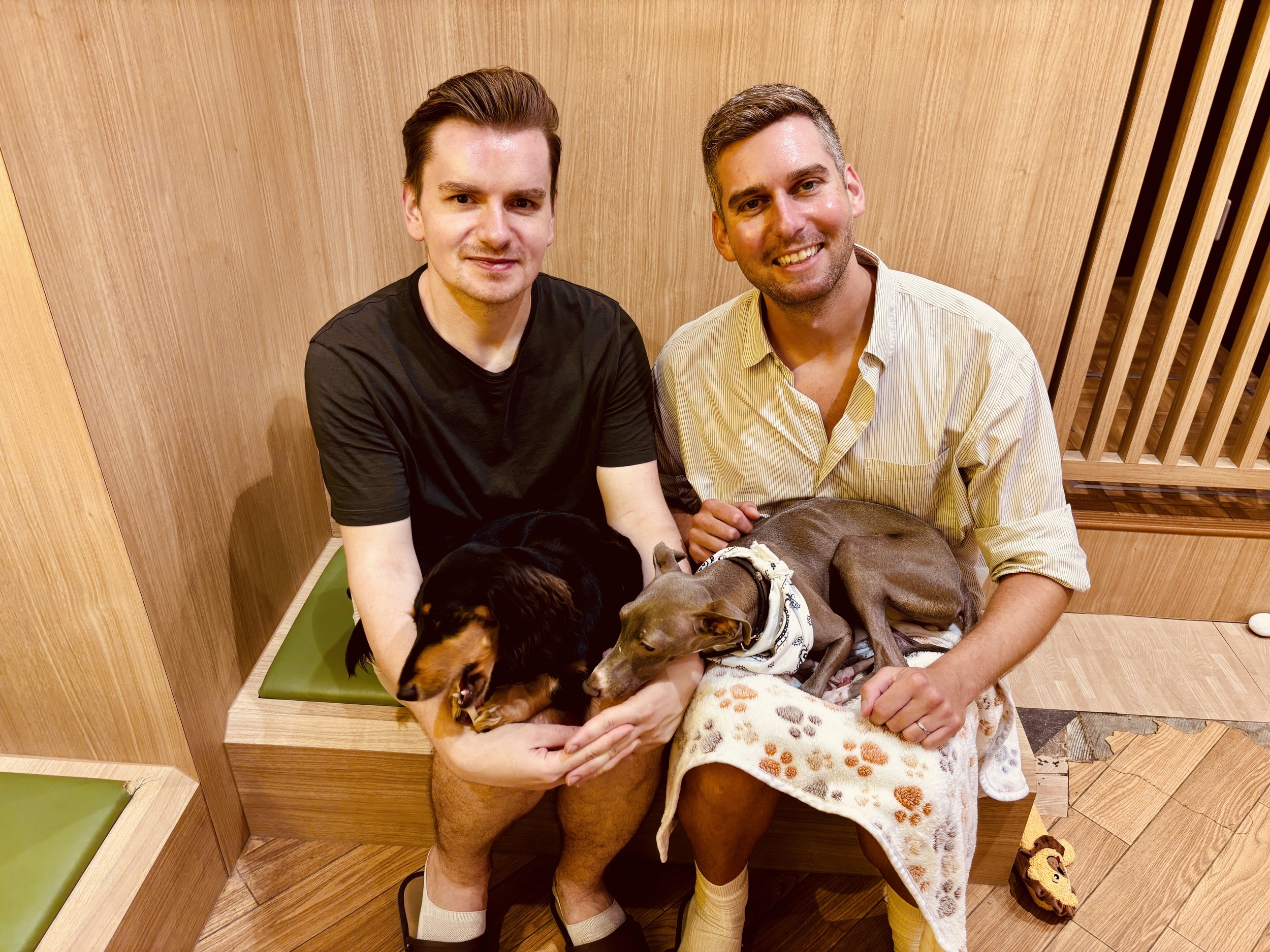
We adopted our dog, Goldie, six years ago and she was the first addition to our little family. She sleeps in our bed, she is wonderful with children, and she has just completed her training as a therapy dog.
Favourite foods/meals- Lukas eats mostly vegetarian and could have his chickpea curry almost every day. Beyond that he loves hearty German home cooking done without meat: vegetarian sausages with mashed potato, that sort of thing. He is from Bavaria, so the Bavarian comfort-food tradition runs deep, just in a meat-free version :)
Manuel is the carnivore of the two. Chicken Caesar salad, every day if he could, or turkey mince with beans, edamame and chopped tomatoes. At the moment he eats a green cucumber salad with a lot of chilli more or less daily, good for the immune system, he insists. And Coke Zero, which he admits is a weakness.
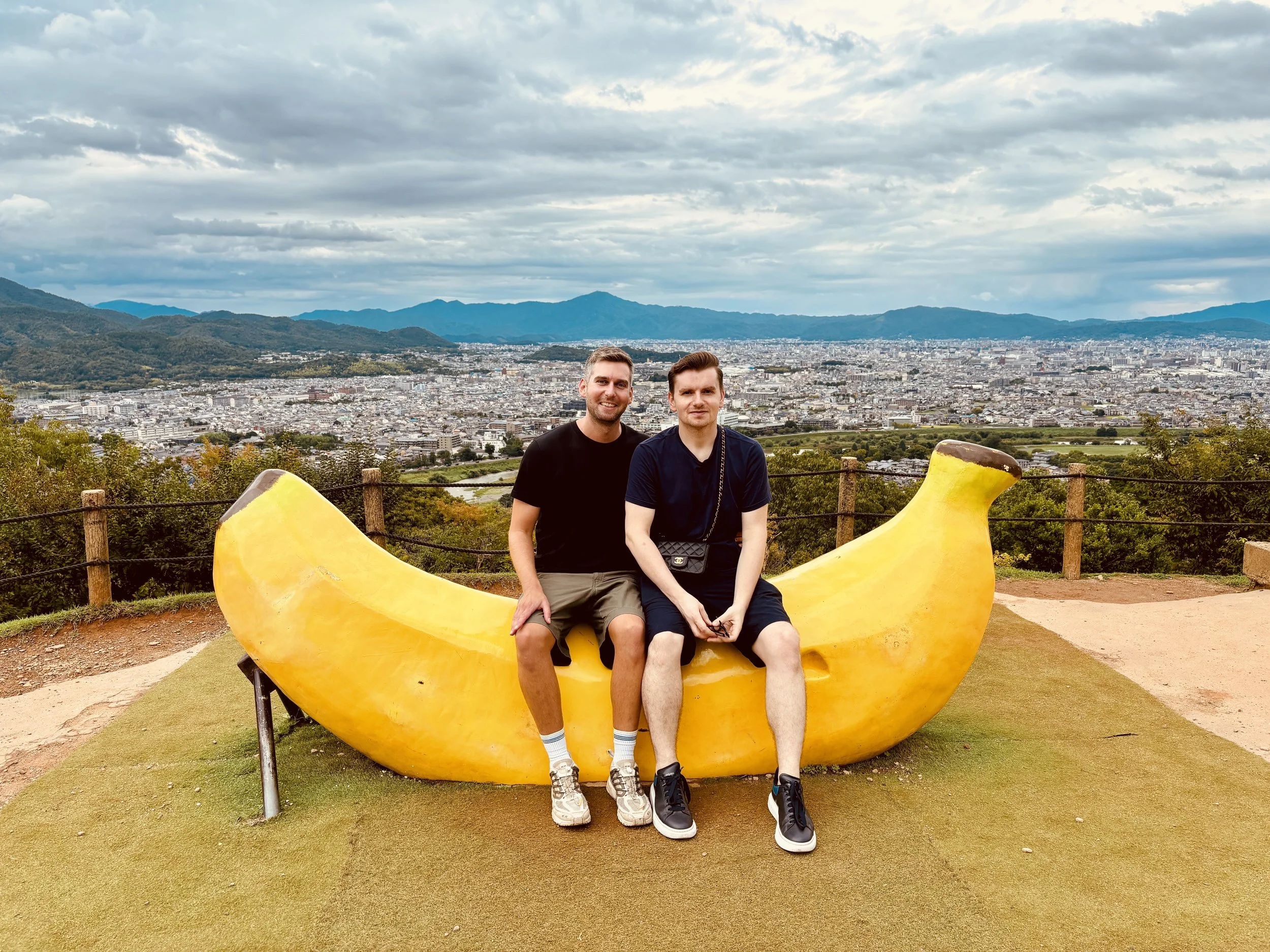
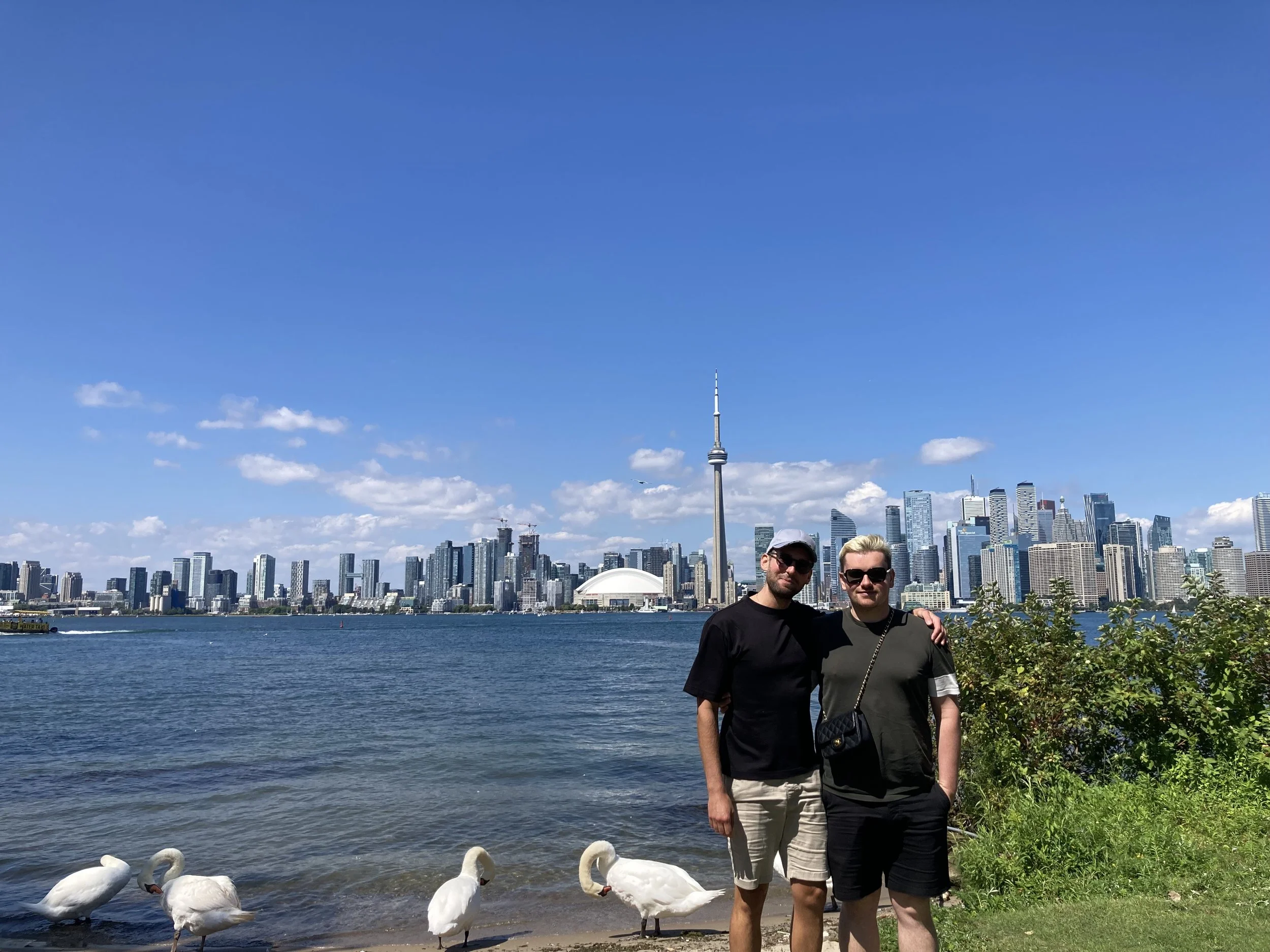
Favorite places to travel: Ireland is firmly number one. We go at least once or twice a year, and we actually lived there in 2019 and 2020. When we came to Canada to meet our clinic a few years ago, we stayed in Toronto for a good while visiting friends, and we fell for the city completely. We went to the CNE, which was gloriously odd and great fun, and Niagara Falls was beautiful. Beyond that: Thailand, Japan (a dream for Manuel, who loves vintage shopping), Cape Town, and a lot of Europe.
Childhood: Lukas grew up in an apartment building with a courtyard where all the children from the block played together. Different ages, the older ones showing the younger ones how things worked. They planted vegetable beds, built a tree house and stayed out there until late every evening all summer long.
Manuel's family travelled a lot to Spain. It was in Spain that his family found Snoopy, who became their family dog. He turned up during a thunderstorm, sat himself down outside the door, walked straight in, climbed onto Manuel's father's bed and settled there. And eventually came home with them. The lovely coincidence is that Goldie, decades later, comes from the very same village.
The harder part of Manuel's childhood was moving house often for his parents' work. That is part of why he is working hard towards a house of our own within the next one to three years. He wants our child to have one home base and the memories that come with it.
Talents: Manuel can invent songs on the spot, which is reliably funny. He's also super creative. Ideas and concepts come to him easily, which is also his profession. Lukas can open the fridge, look at whatever happens to be left in there, and build a meal out of it.
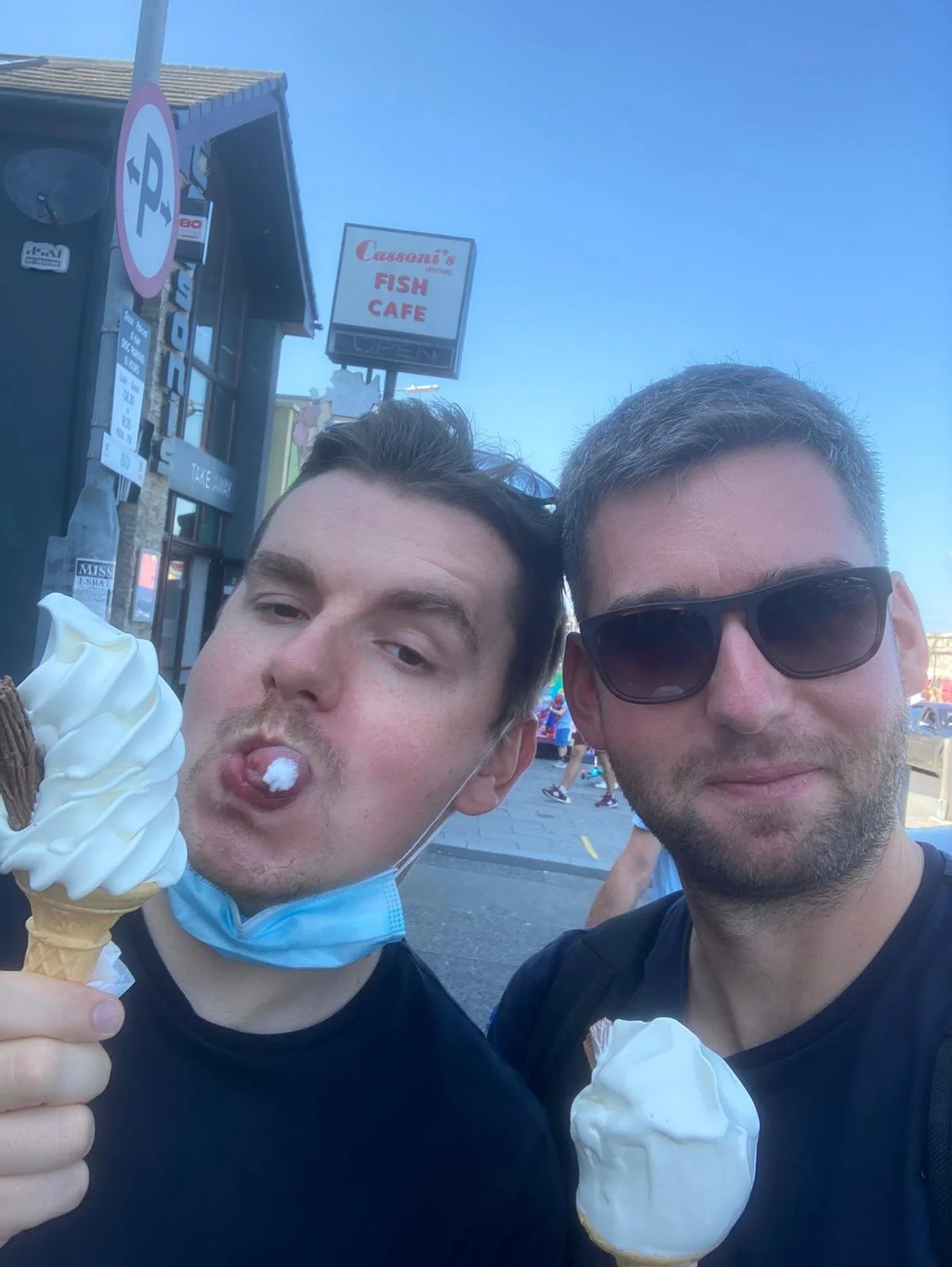
How we met: Ten years ago, in 2016. We had been messaging for about a month before we actually met, and the first time was spontaneous. Manuel invited Lukas out for ice cream just before he was flying off on holidays. Even at that first meeting we ended up talking about marriage and children. Our first proper date was at Kimchi Princess here in Berlin.
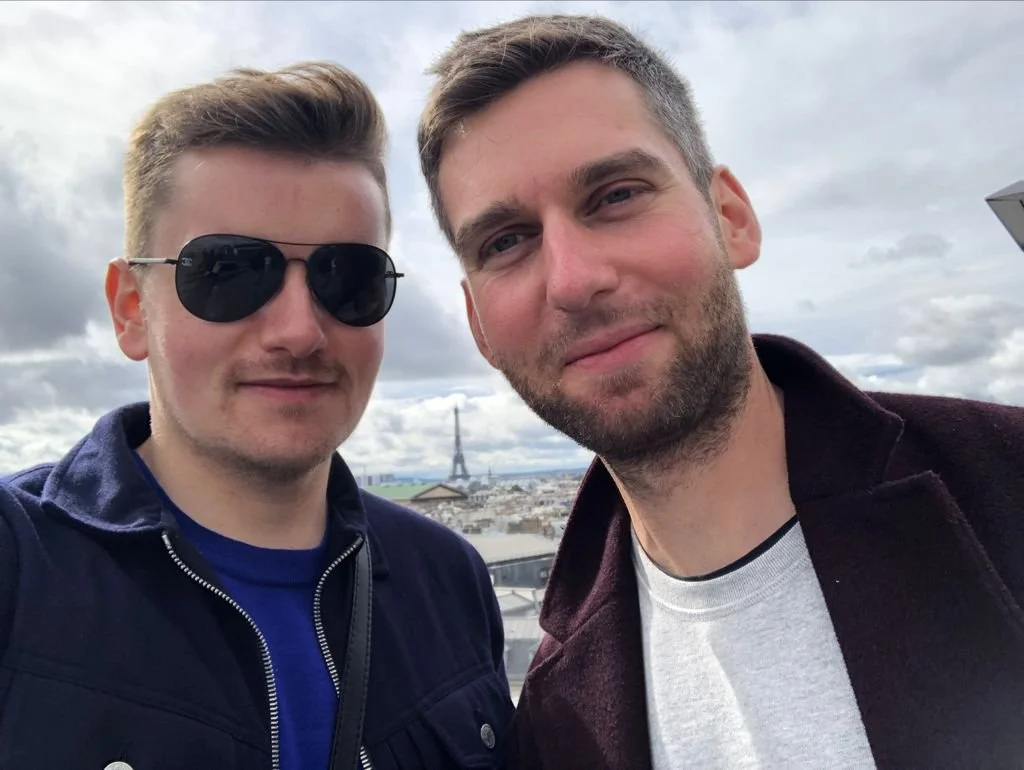
Manuel proposed in Paris on top of the Arc de Triomphe in 2021 and Lukas said yes. We are getting married next year!
What matters to us: Both of us have a strong sense of fairness. Manuel has ADHD, and one of the things that comes with it for him is that injustice is very hard to walk past. As a student he founded two works councils in German retail businesses to stand up for employees' rights, and recently he served as a polling officer here in Schöneberg. Honesty in how we talk to each other matters to us just as much, and both of those are things we want to pass on.
Neither of us grew up wealthy. We both started working early, and the value of money is something we take seriously, not in the sense that our child should be working from the womb, but we would like them to understand, at an age-appropriate pace, that things have to be paid for and are not simply there.
Giving something back matters to us too. Goldie has just completed her training as a therapy dog, and from now on we will be visiting a queer retirement home twice a month so she can share some of her affection with the residents. And Lukas runs cooking classes for children, not about rules or diets, just about where food comes from and how you can make things yourself instead of always eating out of a packet.